Walking onto the diamond for the first time can feel daunting, but a beginner baseball session in the Wellington region is designed to put newcomers at ease. A first practice is really an orientation: you meet the coaches and other players, learn a handful of safety rules, and run through the basic movements of throwing, hitting, fielding and baserunning at a relaxed pace. If you searched the phrase “what to expect” you may first have landed on the Hollywood comedy of the same name listed on Wikipedia — but a first baseball session is a very different, far more hands-on experience. This guide explains how a typical session unfolds, what to bring, and the safety and etiquette standards New Zealand clubs follow.
Key Points
- It’s an orientation, not a tryout: a first session focuses on meeting the team and learning the basics, not on performance.
- Typical flow: check-in and safety briefing, dynamic warm-up, throwing, then skill stations for hitting, fielding and baserunning.
- Arrive early: aim for about 15 minutes before the start to get geared up.
- Bring the essentials: a broken-in glove, water, suitable footwear and weather-appropriate clothing.
- Safety first: NZ clubs follow the Pitch Smart pitch-count guidelines and keep bats and helmets tightly controlled.
Before you arrive: getting practice-ready
Turning up a little early makes the first session far smoother. Wellington diamonds such as Ian Galloway Park in Northland and Ascot Park can be busy with several teams sharing the grounds, so the first few minutes are usually spent checking in with a coach, meeting teammates and getting geared up. Aim to arrive around 15 minutes before the scheduled start.
For junior grades, coaches often hold a short parent briefing to cover the season plan, the club code of conduct and volunteer roles like scoring. It is also the moment to let a coach know about any allergies or medical conditions before drills begin. If you have not signed up yet, our guide on getting your child into baseball in NZ walks through registration first.
What the first few minutes look like
- Check-in: confirming registration and being pointed to your team or age group.
- Introductions: a short meet-and-greet so players and coaches learn names.
- Safety briefing: dugout rules, keeping a batting helmet on when hitting, and never swinging a bat near others.
- Gear fitting: making sure gloves, helmets and any borrowed equipment fit before the session starts.
Warm-ups and throwing: how a session starts
Once the team is together, practice usually opens with a dynamic warm-up rather than static stretching. Expect light jogging plus arm circles, leg swings and gentle torso rotations to loosen the shoulders and prepare the legs — useful in Wellington’s cooler spring mornings, when muscles take longer to warm up.
Throwing (“playing catch”) is the foundation of the game and comes next. Beginners start close together, roughly 8–10 metres apart, and gradually move back as accuracy improves. Coaches watch your grip, ideally a four-seam grip with the fingers across the wide seams, which helps the ball travel straight. The target is simple: throw to your partner’s chest. If you want to keep improving between sessions, these baseball drills for youth players are a good starting point.
Skill stations: hitting, fielding and baserunning
The core of most Wellington practices is a station rotation. The group splits into small teams and spends roughly 10–15 minutes at each station before moving on. This keeps everyone active, maximises the number of repetitions and lets coaches give individual feedback. For first-timers the stations are kept simple and fun.
| Station | Focus skill | Typical beginner drill |
|---|---|---|
| Hitting | Balance and contact | Tee work, then soft toss |
| Infield | Ground balls | The “alligator” two-handed scoop |
| Outfield | Fly balls | Tracking and calling for the ball |
| Baserunning | Speed and safety | Running through first base |
At the hitting station the emphasis is on a level swing and staying balanced, not on power. You will likely begin with tee work — hitting a stationary ball off a batting tee — before progressing to soft toss, where a coach gently lobs the ball from the side. In the field, the “alligator” technique teaches you to field a ground ball with two hands, the glove as the lower jaw and the bare hand closing over the top.
Learning the field: positions and the ready position
Later in the session you will start to learn where to stand. Baseball has nine defensive positions, each with a standard number used in coaching signals and scoring — the pitcher is 1 and the shortstop is 6, for example. A first practice mainly teaches the “ready position”: knees slightly bent, weight on the balls of the feet and glove out in front, so you can react in any direction.
| No. | Position | Where they play |
|---|---|---|
| 1 | Pitcher | On the mound, delivers the ball |
| 2 | Catcher | Behind home plate |
| 3 | First base | Takes most force-out throws |
| 4 | Second base | Right side of second |
| 5 | Third base | The “hot corner” |
| 6 | Shortstop | Between second and third |
| 7 / 8 / 9 | Outfield | Left, centre and right field |
You do not need to memorise these on day one. If you want to get ahead, our explainer on baseball position numbers breaks the whole system down.
Baserunning basics
Baserunning is often the most enjoyable part of a first practice, and it follows clear rules. The first thing you will learn is to run through first base — sprinting past the bag rather than stopping on it — which is the fastest and safest way to reach base on a ground ball. A few rules coaches introduce early:
- Touch every base in order: first, second, third, then home, to score a run.
- No passing: you cannot overtake a teammate ahead of you on the bases.
- Helmet stays on: keep your batting helmet on the whole time you are running the bases.
- Tagging up: on a caught fly ball, wait on your base before advancing.
Pitching, catching and the Pitch Smart rules
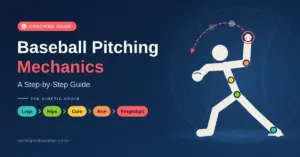
Players interested in the “battery” roles — pitcher and catcher — may spend part of the session in a specialised group. Aspiring pitchers practise a balanced wind-up and a consistent release point, often throwing at a net or target to build control rather than trying to throw hard. Catchers learn blocking basics: dropping to the knees to keep low pitches in front of them.
New Zealand clubs follow the internationally recognised Pitch Smart guidelines, an MLB and USA Baseball program that sets age-based daily pitch limits and required rest days to protect young arms from overuse injuries. Because of this, coaches monitor pitch counts closely and will rest a young pitcher rather than push them.
What to bring: gear and clothing
Your club may lend team bats and helmets for a first session, but a few personal items make the day easier. The most important is a baseball glove that has been broken in so it closes easily — a stiff, brand-new glove is hard to use. Dress for the weather: athletic clothing and, on cool Wellington mornings, a long-sleeved top. Moulded plastic cleats suit grass diamonds, while trainers are fine for indoor cage sessions.
First Practice Checklist
| Item | Status | Why |
|---|---|---|
| Baseball glove (broken in) | Bring your own if possible | Fielding; loaners may be available for a first session |
| Water bottle | Essential | Staying hydrated, even in cool weather |
| Athletic clothing / long-sleeve top | Essential | Comfort and warmth on cool mornings |
| Moulded cleats | Recommended | Traction on grass and dirt (no metal spikes for juniors) |
| Batting helmet | Optional | Clubs usually provide one; own helmets should be certified |
| Bat | Often provided | Must be USABat or BBCOR certified for the grade |
If you are buying gear soon, it pays to get the details right. See how to break in a baseball glove and our guide to choosing a baseball bat for kids.
A quick word on bat standards
Clubs following Little League rules use two main bat certifications. Younger divisions (Majors and below) require bats carrying the USA Baseball mark, known as the USABat standard. The Intermediate and Junior divisions accept either USABat or BBCOR bats, while the Senior division requires BBCOR — the same standard used in high-school baseball overseas. If in doubt, ask your coach before buying, as an uncertified bat cannot be used in games.
Etiquette, safety and how the club works
Baseball is shaped by both written rules and unwritten etiquette, and a first practice introduces both. Coaches emphasise respecting the umpire (often called “blue”), encouraging teammates, and “hustling” — running on and off the field rather than walking. Communication matters too: outfielders call loudly for fly balls to avoid collisions.
Safety underpins everything, from helmets in the batting cage to keeping clear of swinging bats. For a fuller rundown aimed at families, read our baseball safety tips for kids in Wellington. Parents of younger players are usually encouraged to stay for the first session, both to help and to learn the drills alongside their child; our overview of Little League baseball in Wellington covers what to expect across a season.
Winding down and what comes next
Most sessions finish with a light cool-down and a short team meeting. Coaches recap the skills of the day, confirm the next practice date and answer questions — a good time to raise anything that confused you. Helping to collect balls and pack down shared gear is a small courtesy that coaches appreciate.
From there, the pathway is gradual. Beginners build the ready position, a four-seam grip and a level swing into muscle memory over many sessions, and the same fundamentals carry all the way up to New Zealand’s national side, the Diamondblacks. Stay hydrated, listen to your coaches and enjoy learning the game.
Sources
- Baseball New Zealand — Little League and national participation framework
- Baseball New Zealand — Diamondblacks national team
- MLB Pitch Smart — Guidelines for Youth and Adolescent Pitchers
- Little League — Baseball Bat Standards (USABat and BBCOR)
- USA Baseball — About the USABat standard
- Wellington City Pirates Baseball — club and venue information (Ian Galloway Park)
Frequently Asked Questions
What if I don’t have a baseball glove yet?
Most clubs keep a few loaner gloves for a first session, so you can still take part. It is worth getting your own soon afterwards, as a glove needs breaking in before it works well.
How long does a first practice usually last?
It varies by age group. Sessions for the youngest players are often around 60 minutes, while older youth and senior grades may train for up to two hours, including warm-ups and a cool-down.
What kind of shoes should I wear?
Moulded plastic cleats are ideal on grass and dirt diamonds, and trainers are fine indoors. Metal spikes are not permitted in junior grades, so check with your coach before buying.
Do parents need to stay during the session?
For younger grades it is strongly encouraged, both to help with safety and to learn the drills alongside their child. Older players are generally comfortable being dropped off.
What happens if it rains on practice day?
Wellington clubs usually send rain-out notices through a team app, email or social media, often about an hour before the session. If unsure, check your team’s channel before heading out.