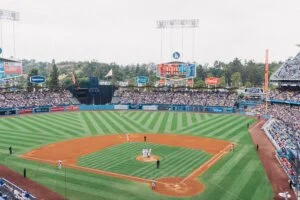

In baseball, the first baseman is the infielder stationed closest to first base — the base a batter must reach safely to be credited with a hit. It is one of the busiest defensive spots on the field, taking part in a large share of every game’s outs, and it also carries some of the highest expectations for hitting. This guide explains what the first baseman does, the skills the role demands, why left-handed throwers are prized there, and how the position fits into the wider infield.
Quick Facts
| Position number | 3 |
|---|---|
| Location | Right side of the infield, at or near the first-base bag |
| Glove | First baseman’s mitt (longer, extra scoop) |
| Preferred throwing hand | Often left-handed, for the natural tagging and throwing advantage |
| Key defensive skills | Stretching, scooping low throws, footwork, holding runners |
| Typical offensive role | Power hitting and run production |
What the First Baseman Does
The first baseman fields the area nearest first base and is responsible for the majority of plays made at that bag. On defensive scorecards each position is given a number, and first base is position number 3. If you are new to the shorthand used to record plays, our guide to baseball position numbers explains how the whole system works.
When no runner is on base, the first baseman usually plays a few steps to the right of the bag and back on the infield dirt, giving them range to field ground balls while still being able to return to the base for a throw. To help catch throws cleanly, they wear a specialised glove called a first baseman’s mitt, which is longer and more scoop-shaped than a standard fielder’s glove. If you use one, it pays to learn how to break in a baseball glove so it forms a reliable pocket.
Defensive Responsibilities
Most of a first baseman’s work happens on defence. The core job is to receive throws from teammates and record outs, but good first basemen do far more than simply stand on the bag.
Receiving Throws and Stretching
After another infielder fields a ground ball, they throw to first base to force the batter out. The first baseman must keep one foot in contact with the bag while stretching toward the ball to catch it before the runner arrives — every fraction of a second matters on a close play. Choosing which foot to place on the base, and stretching in the direction of an off-line throw, are fundamental skills.
Scooping Balls Out of the Dirt
Not every throw arrives on a clean line. Many bounce in front of the base, and the first baseman is expected to “scoop” or “pick” these short-hop throws out of the dirt. A confident glove on low throws saves teammates from errors and keeps rallies alive for the defence.
Fielding Ground Balls and Bunts
The first baseman also fields ground balls hit to their side of the infield, then either throws to another base or races the runner back to first themselves. When a bunt is likely, they charge in from the base to field the ball quickly and make the throw. Quick reactions and a dependable glove are essential.
Holding Runners and the Pickoff
When a runner is on first, the first baseman “holds” them by standing on the inside corner of the bag, ready to catch a pickoff throw from the pitcher and apply a tag. Staying close to the base limits the runner’s lead and makes stealing harder. This is one reason footwork and a quick tagging motion matter so much at the position.
Turning the Double Play
First base is part of several double plays. In the well-known 3-6-3 double play, the first baseman (3) fields the ball, throws to the shortstop (6) covering second base, and hustles back to first to take the return throw for the second out. This style of playing off the bag and deep was popularised by early first baseman Fred Tenney and remains standard today.
Why Left-Handed Throwers Suit First Base
First base is the one infield spot where left-handed throwers hold a genuine advantage. A left-hander’s glove sits on the right hand, which faces the rest of the diamond, making it easier to catch throws and apply a sweeping tag on pickoffs. Left-handers are also better positioned to throw across to second base to start a double play. Because of this, teams often prefer a tall, flexible, left-handed player at first — though many excellent first basemen throw right-handed, so it is a preference rather than a rule.
Offensive Expectations
First base is traditionally a hitting position. Because the defensive demands are lower than at shortstop or catcher, teams often place a strong bat there and expect meaningful production at the plate.
Power and Run Production
First basemen are frequently among a team’s leading power hitters, driving the ball for extra bases and clearing the fence for home runs. A key measure of that contribution is runs batted in (RBIs) — the runners a hitter drives home. Players looking to build these skills can start with our general hitting tips.
Plate Discipline
Beyond power, a valuable first baseman shows patience: working the count, drawing walks, and forcing pitchers to throw strikes. Good plate discipline puts more runners on base and lengthens the batting order, even when the hitter is not swinging for the fences.
Footwork, Positioning and Athleticism
Although first base is sometimes seen as an easy position, the best defenders are quick and coordinated around the bag. They must judge which foot to anchor on the base, shift for off-target throws, and adjust when the team uses a defensive shift. Smooth footwork and balance turn awkward throws into routine outs and prevent injuries in collisions at the base.
Notable First Basemen
Several players are remembered as much for their glove as their bat. Keith Hernandez is widely regarded as one of the finest defensive first basemen ever, and names such as Don Mattingly, J.T. Snow, Anthony Rizzo and, more recently, Christian Walker are associated with award-winning defence at the position. Studying how these players receive throws, hold runners and cover the bag is a useful way for beginners to see the role done well.
First Base in the Wider Infield
First base works in constant coordination with the rest of the infield. The second baseman and third baseman throw across to first on most ground-ball outs, so clear communication and consistent positioning keep the whole defence sharp. Understanding how each spot connects helps new players read the game and know where to be on every play.
Key Points
- The first baseman fields the area nearest first base and is scored as position number 3.
- Core duties are receiving throws, stretching to the bag, scooping short-hop throws, fielding grounders and bunts, and holding runners.
- Left-handed throwers have a natural advantage at the position, but the role is open to right-handers too.
- First base is traditionally a strong hitting spot, valued for power, run production and plate discipline.
- Good footwork, quick reactions and clear communication with the rest of the infield define the best defenders.
Sources
Frequently Asked Questions (FAQ)
What position number is the first baseman?
First base is position number 3 in the standard fielding numbering system used to record plays on a scorecard. The numbers run from the pitcher (1) and catcher (2) through the infield and out to the outfield.
Why are many first basemen left-handed?
A left-handed thrower’s glove is on the right hand, which faces the infield. This makes it easier to catch throws, apply a sweeping tag on pickoff attempts, and throw across to second base to start a double play. It is a preference, though, and plenty of first basemen throw right-handed.
What kind of glove does a first baseman use?
First basemen use a specialised first baseman’s mitt. It is longer and more scoop-shaped than a regular fielder’s glove, which helps with stretching for throws and picking low balls out of the dirt.
Do first basemen have to be good hitters?
Traditionally, yes. Because first base has lower defensive demands than positions like shortstop or catcher, teams usually expect strong hitting, often with power and run production. Expectations can still vary from team to team.
What is a 3-6-3 double play?
It is a double play that starts and ends at first base. The first baseman (3) fields the ball and throws to the shortstop (6) covering second, then returns to first to catch the relay throw for the second out.