Good base running wins games that the box score rarely explains. A runner who sprints through first base, rounds the bag cleanly and reads the play can turn a single into a double or score from second on a short hit, all without swinging harder or throwing faster. Base running in baseball is a mix of speed, smart angles and discipline, and almost every part of it can be learned. This guide walks beginners and Kiwi players through the tips that help you take the extra base safely.
Key Points
- Run hard through first base on every ball; step on the front of the bag and only look for an overthrow after you cross it.
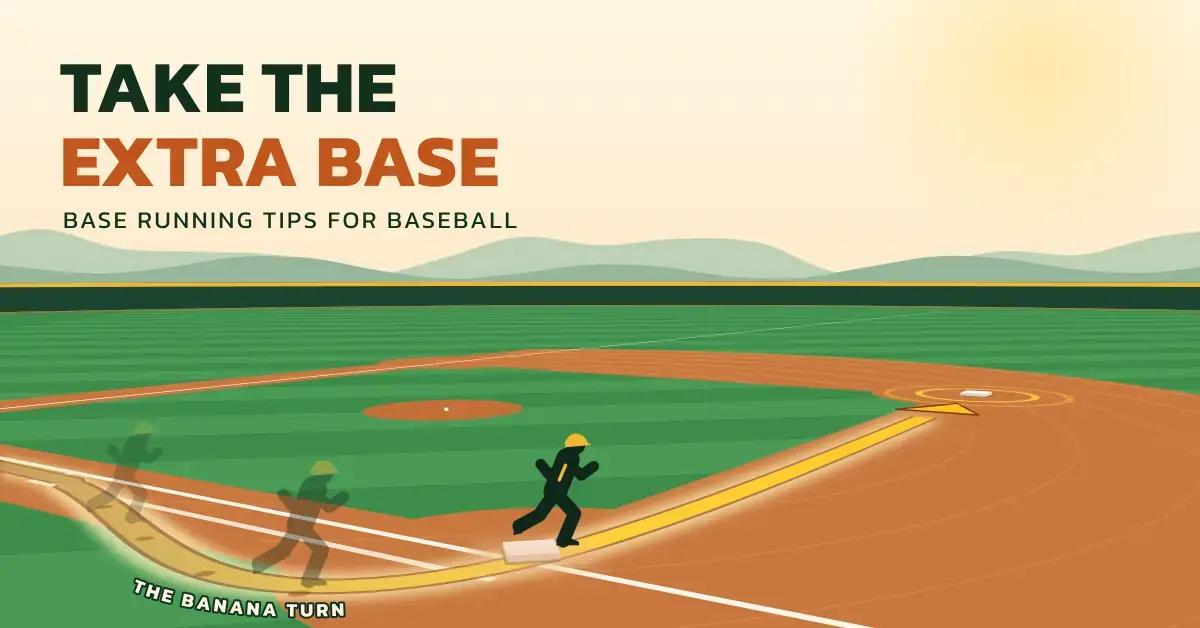
- On hits to the outfield, round first in a small “banana” curve so you can push on toward second.
- Take a controlled primary lead, then a secondary lead as the pitch is thrown, with your eyes on the pitcher.
- Slide feet-first with the bent-leg technique, starting about 9 to 10 feet (3 metres) from the bag; never slide late.
- Know the rules: you may overrun first base, you must tag up on caught fly balls, and in Little League there is no leading off.
How base running works
Base running is simply the job of advancing safely from base to base and, eventually, home to score. On a standard field the bases sit 90 feet (about 27 metres) apart, the distance set out in Major League Baseball’s official rules; Little League’s Major Division is played on a smaller 60-foot (about 18-metre) diamond. A runner is safe when they reach a base before being tagged or forced out, and the goal on every batted ball is to gain as many bases as you safely can.
The best runners are not always the fastest. They watch the ball, the fielders and the coaches, and they decide early whether to hold, round or go. If you are still learning the basics of the game, our guide on how to play baseball explains how the bases, outs and innings fit together before you focus on running them.
Running to first base the right way
The sprint to first base is where new players lose the most ground. Keep these points in mind:
- Run hard, every time. Treat every ball you put in play as a chance to reach base. Hustle out of the batter’s box and run in a straight line down the lane toward the bag.
- Don’t watch the ball. Keep your head up and your eyes on the base, not on where you hit it. Watching the ball slows you down.
- Run through the bag. On a routine ground ball, sprint straight through first base and step on the front edge of the bag with either foot. Do not slow down or leap early; running through is faster and safer than a slide.
- Peek for an error after you cross. Once you have run past the bag, glance over your right shoulder to check whether the fielder dropped or overthrew the ball. If it got away, you can turn and try for second.
A useful rule: under Major League Baseball’s official rules (Rule 5.09(b)), a batter-runner cannot be tagged out after overrunning or oversliding first base as long as they return to it immediately. The moment you attempt to run to second, you are out when tagged, so only turn up the line if you have seen the ball get loose.
Taking turns and reading the extra base
When your hit reaches the outfield, first base becomes a turning point rather than a stopping point. Instead of running in a straight line and braking, curve your path slightly outward a few steps before the bag, in a shape coaches call a “banana” turn. This lets you clip the inside corner of the base with your foot and accelerate smoothly toward second rather than stopping dead and restarting.
Then read the play. Pick up the ball off the bat, or trust your base coach’s signal, and keep running until a fielder clearly has the ball and the play is dead. Taking the extra base is about committing early: hesitation between bases is what gets runners thrown out. The same reading skill helps a runner on second decide whether to score on a single. If you want to understand what the fielders are doing while you run, our look at the outfield in baseball shows how arm strength and positioning affect your chances of taking an extra base.
Leads and stealing a base
Once you are on base, a lead is the few steps you take off the bag before and during the pitch. A good lead shortens the distance to the next base and sets up a steal. Keep your eyes on the pitcher at all times so you can dive back if a pickoff throw comes.
Primary and secondary leads
| Feature | Primary lead | Secondary lead |
|---|---|---|
| What it is | The lead you take off the base before the pitch, once the pitcher is set | Two shuffle steps you add as the pitcher delivers the ball |
| When you take it | After the pitcher comes set, standing off the bag | As the ball is released and travels to the plate |
| Typical size | A safe distance you can get back from, often a couple of steps | A couple of extra shuffles, feet active and balanced |
| Main purpose | Shorten the distance to the next base | Build momentum so you can break on contact or a passed ball |
| If a throw comes | Dive back to the corner of the base nearest the pitcher | Regain balance and return, or read the play and go |
Reading the pitcher and the catcher
Stealing is as much about timing as speed. Watch the pitcher for the moment they commit to the plate rather than to a pickoff, and learn their rhythm. Watch the catcher and the flight of the pitch too: if a ball bounces in the dirt and gets past the catcher, break for the next base at once. Reading these cues early is what lets an average runner steal successfully.
Stealing a base
To steal, take your secondary lead as the pitcher delivers, then explode toward the next base with a hard cross-over first step and low, pumping arms. Slide into the far corner of the bag away from the tag. Pick your spots: steal when the pitcher is slow to the plate, when the count favours you, or when the defence is not expecting it. In the Major Leagues and the older youth divisions, runners lead off before every pitch; in junior baseball the rules are stricter, as explained below.
Sliding safely
Sliding lets you reach a base at full speed while giving the fielder a smaller target to tag, and it helps you stop on the bag instead of overrunning it. The most common and reliable technique is the bent-leg slide, sometimes called the figure-four:
- Start early. Baseball Canada’s coaching guidance is to begin your slide at least 9 to 10 feet (about 3 metres) from the bag. Do not slide late.
- Stay low. Keep your centre of gravity low and go in feet-first. Do not leap or pop up into the tag.
- Bend one leg under. Take off from whichever leg feels natural and tuck it under you, sliding on the calf, thigh and backside. Keep the top leg relaxed and slightly bent, heel off the ground, and touch the base with that top foot.
- Protect yourself. Throw your head back as you go down so your knees do not hit first, and keep your hands up and off the ground to avoid jamming fingers.
Practise on soft, wet grass with your shoes off until the finished position feels natural. Feet-first slides are safer for beginners than head-first dives, which put hands and wrists at risk.
Base running rules every new player should know
A few rules decide whether your hustle actually counts:
- Force outs. When a runner behind you must advance because the batter is now a runner, you are “forced” to the next base, and a fielder only needs to touch that base with the ball to put you out. With no force, you must be tagged.
- Tag up on fly balls. If a fly ball is caught, you must be touching your base at the moment of the catch before you try to advance. Leave too early and you can be doubled off. On a deep fly, tagging up and advancing after the catch is a legitimate way to take a base.
- Foul tip versus foul ball. Major League Baseball’s official rules define a foul tip as a ball that goes sharp and direct from the bat to the catcher’s hands and is legally caught: it is a live ball that counts as a strike, so runners may advance or steal at their own risk. An ordinary foul ball that is not caught is a dead ball, and all runners must return to their bases.
Knowing these situations keeps you from running into easy outs. For the wider glossary of calls and abbreviations you will hear at the diamond, our list of baseball terms is a handy reference.
Base running in Little League and youth baseball
Junior baseball changes the rules to keep things safe and fair. In Little League’s Major Division and below, there is no leading off: under the Little League leaving-the-base-early rule (Rule 7.13), runners must keep contact with their base until the pitcher releases the ball. If a runner leaves early, the umpire drops a flag, the play is allowed to finish and the runner is returned to the base. Because runners cannot lead off, a balk is not called at these levels either. Leading off before the pitch only enters the game in the older Intermediate (50/70), Junior and Senior divisions, though runners in every division may still steal once the ball is on its way to the plate.
For young players in the Wellington region, that means base running practice starts with running form, clean turns and sliding rather than stealing. If you are helping a child get started, see our advice on kids baseball in New Zealand and the wider path of baseball skills development for Kiwi players.
Drills and training to get better
Base running training is simply structured practice of the skills above, built into drills you can repeat until they become automatic. Useful ones include:
- Home-to-first sprints: start in the batter’s box, run through the bag at full effort and practise the error peek.
- Rounding drills: jog the banana turn at first, hitting the inside corner, then build up to full speed.
- Lead-and-break: take a primary lead, add a secondary lead on a coach’s cue and explode toward the next base.
- Sliding practice: rehearse the bent-leg slide on soft ground until the finish feels natural.
Mix these into your sessions alongside hitting and fielding work. You will find more ideas in our baseball drills for youth players, and base running pairs naturally with the small-ball skills in our guide to how to bunt and our hitting tips for moving runners around the bases.
Sources
Frequently Asked Questions
How fast should you run to first base?
As fast as you can, but technique matters more than any stopwatch time. Hustle out of the box, run in a straight line, keep your head up and sprint through the front of the bag without slowing or leaping. Running through first is quicker than sliding, and only turning up the line after you have passed the bag keeps you safe.
Can a base runner advance on a foul tip?
Yes. In Major League Baseball’s official rules, a foul tip is a ball that goes sharp and direct from the bat to the catcher’s hands and is legally caught. It is a live ball and counts as a strike, so runners may try to advance or steal at their own risk. An ordinary foul ball that is not caught is dead, and all runners must return to their bases.
What is base running training?
It is structured practice of base running skills: sprints through first base, rounding and banana-turn drills, taking primary and secondary leads, breaking for a steal and sliding. Repeating these drills builds the speed, reads and technique that let you take extra bases in a game.
Is leading off allowed in youth baseball?
Not in Little League’s Major Division and below, where runners must keep contact with the base until the pitcher releases the ball; leaving early means the umpire returns them to the base. Leading off before the pitch is allowed in the older Intermediate (50/70), Junior and Senior divisions, though runners in the Major Division may still steal once the ball is released.
Do you always have to slide into a base?
No. You slide to beat a tag or to stop on a base at full speed. At first base you usually run straight through instead of sliding, while second, third and home often call for a slide when a close play is coming. When no throw is near, simply run over the bag.