
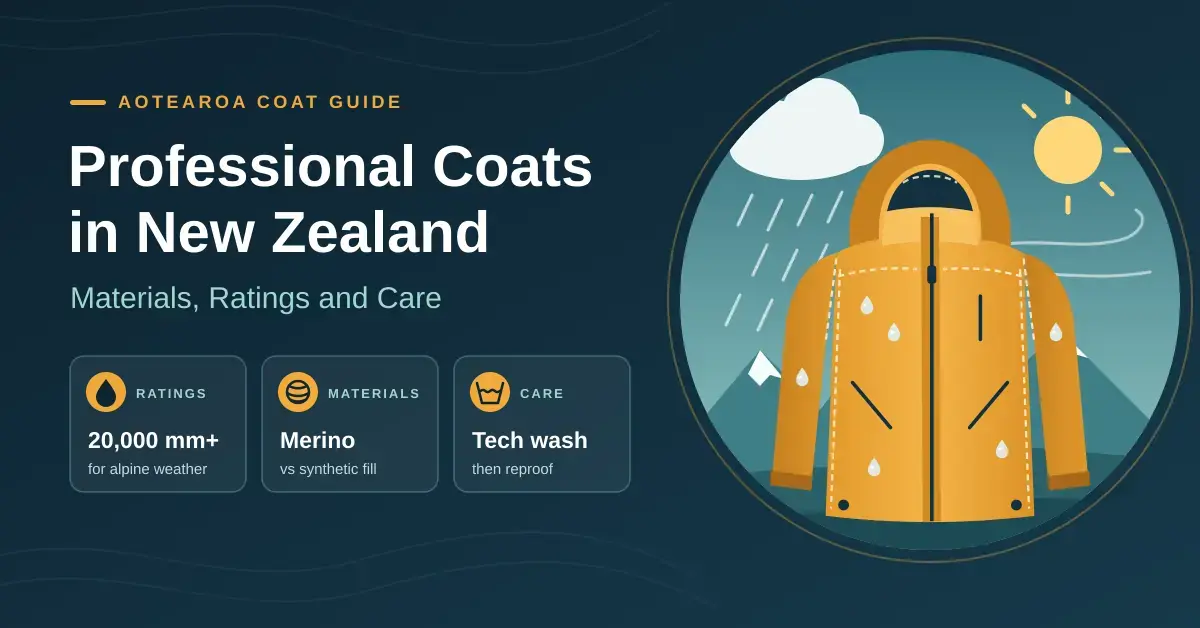
Choosing a coat in New Zealand means planning for weather that can change several times in a single day. This guide explains how different materials, waterproof ratings and construction methods perform in Aotearoa’s damp, windy and high-UV conditions, so you can match a garment to where you live and how you use it. It covers wool and synthetic insulation, waterproofing standards, sustainability labels, care routines and the technology now shaping how coats are made and sold.
Key Points
- Match the rating to the region: around 10,000 mm for city rain, 20,000 mm+ for alpine or heavy weather.
- Seams matter as much as the number: only taped or welded seams make a coat truly waterproof.
- Wool vs synthetic: merino regulates temperature and resists odour; synthetics are lighter and dry faster.
- Check certifications, not slogans: RDS, RWS, GRS, bluesign® and Fair Trade back up sustainability claims.
- Care extends life: use a tech wash on shells, avoid fabric softener, and reproof when water stops beading.
From oilskins to modern shells: outerwear in New Zealand
New Zealand’s outerwear tradition grew out of farming, forestry and coastal work. Waxed cotton oilskins and heavy woollen bush shirts—the kind popularised by long-standing brands such as Swanndri—were built to shrug off rain and wind in the high country and around the ports. That practical heritage still shapes what sells well today: garments that keep working when the weather turns.
Modern ranges sit on a spectrum. At one end are classic wool overcoats favoured in urban centres such as Auckland, Wellington and Christchurch; at the other are technical shells borrowed from tramping and alpine sport. Many recent designs blend the two, pairing a smart silhouette with features such as durable water repellent (DWR) finishes—a treatment that makes water bead and run off the surface—so a single coat can handle both a commute and a weekend walk.
Quick Comparison
| Coat type | Typical material | Best for |
|---|---|---|
| Wool overcoat | Merino or wool blend | Smart, corporate wear in variable cold |
| Waterproof shell | Laminated membrane | Heavy rain and alpine trips |
| Softshell | Woven stretch fabric | Active use and lighter showers |
| Insulated parka | Down or synthetic fill | Cold, wet, casual days |
| Trench / Mac | Cotton blend or coated fabric | Commuting and smart-casual settings |
How common fabrics perform
Each material has trade-offs. The table below summarises where each tends to do its best work.
| Fabric type | Main strength | Best environment |
|---|---|---|
| Merino wool | Natural warmth and odour resistance | Urban and variable cold |
| Laminated shell (e.g. Gore-Tex) | High waterproofing and windproofing | Alpine and very wet cities |
| Recycled polyester | Light and fast-drying | Active, everyday use |
| Waxed cotton canvas | Wind resistance and durability | Drier, rural settings |
Waterproofing and technical construction
In a country as damp as New Zealand, moisture management often matters most. Two numbers describe how a technical coat performs. The waterproof rating, or hydrostatic head, is measured in millimetres and shows how much water pressure the fabric resists before it leaks; breathability is measured in grams of moisture vapour that pass through a square metre of fabric over 24 hours.
As a rough guide, a rating around 10,000 mm handles regular city rain, while 20,000 mm or higher suits sustained alpine conditions. A rating only tells part of the story, though—seams matter too. Taped or welded seams seal the tiny needle holes left by stitching, which is what separates a truly waterproof coat from one that is merely water-resistant.
One clear industry shift is the move away from “forever chemicals.” Traditional DWR coatings relied on fluorinated compounds (PFAS/PFCs). Following bans in several US states from 2025 and tightening European rules, most major outdoor brands have switched to PFAS-free finishes based on silicone, wax or other non-fluorinated chemistry. These perform well against rain, though they can need reproofing a little more often than older treatments.
Features worth looking for
- Taped seams: heat-sealed tape over interior seams that blocks water from entering through stitch holes.
- Adjustable cuffs: hook-and-loop or buttoned tabs that seal in warmth and keep wind and rain out.
- Articulated sleeves: panels cut to follow the arm, giving a wider range of movement.
- Storm flaps: a fabric cover over the main zip that stops wind and water getting through.
Merino wool and natural insulation
Merino wool is a popular choice for smart coats. Its fibres are much finer than standard wool, so it feels soft rather than scratchy and manages moisture well. Wool is hygroscopic, meaning it absorbs water vapour into the fibre; industry bodies such as The Woolmark Company note that wool can take up around 30% of its own weight in moisture before it feels damp, which helps a coat stay comfortable in changeable conditions. Wool is also naturally odour-resistant and, being a protein fibre, biodegrades at the end of its life.
Synthetics are not a lesser option—they are simply different. They dry faster and usually weigh less, which suits high-output activity, whereas wool tends to regulate temperature more evenly across a day of stop-start movement.
| Feature | Merino wool | Synthetic insulation |
|---|---|---|
| Temperature regulation | Even, across changing conditions | Good, often relies on venting |
| Odour control | Strong (naturally resists bacteria) | Lower (can trap odour) |
| Drying speed | Slower | Faster |
| End of life | Biodegradable | Not biodegradable |
Sustainability and ethical certifications
Provenance now influences many buying decisions, and independent certifications are the clearest way to check a claim rather than take it on trust. A few appear regularly on coats sold in New Zealand:
- RDS (Responsible Down Standard): tracks down to birds not subjected to force-feeding or live-plucking.
- RWS (Responsible Wool Standard): covers animal welfare and land management for wool.
- bluesign®: checks that textiles are made with reduced environmental impact and safer chemistry.
- Fair Trade Certified: supports fair pay and conditions for the people making the garment.
- GRS (Global Recycled Standard): verifies recycled content and traces it through the supply chain.
Some local retailers also run repair or take-back schemes that extend a coat’s life and reduce textile waste—a practical side of the wider “slow fashion” idea.
Coping with the Wellington wind
Wellington is often described as one of the windiest cities in the world, with mean wind speeds around 27 km/h and frequent gusts. A coat for the capital needs enough weight to avoid flapping, yet enough breathability to cope with humidity. Densely woven fabrics manage air well, and for exposed walks a lightweight windbreaker jacket layered under or over a warmer piece is a flexible option. A mid-thigh length is a common compromise: it covers the hips without restricting movement on the city’s hills.
Wind-resistant technologies compared
| Technology | How it works | Trade-off |
|---|---|---|
| Softshell | Woven, slightly stretchy fabric | Breathable but only water-resistant |
| Hardshell | Laminated waterproof membrane | Fully windproof but can feel stiff |
| High-density wool | Tight mechanical weave | Classic look but heavy when wet |
| Membrane windproofs | Ultra-thin protective layer | Light but usually pricier |
Styling for work and everyday
Neutral colours such as charcoal, navy and camel remain the most widely stocked in New Zealand, partly because they hide the salt spray and road grime common in coastal cities and pair easily with most wardrobes. A few coat types cover most needs:
- Trench or Mac: a light, water-resistant layer that works for commuting and smart-casual settings.
- Wool overcoat: a tailored option for corporate wear over a suit.
- Car coat: a straight, mid-length cut that suits driving and public transport.
- Parka or insulated coat: a warmer, more casual choice for cold, wet days.
Casual layers such as a varsity jacket or a structured cap from a range of baseball caps can round out a relaxed look when a full coat is more than the day needs.
Care and maintenance
A good coat lasts longest with a simple, material-specific routine. Salt air is a particular concern around New Zealand’s coasts, as it can degrade natural fibres and corrode metal hardware, so airing a coat after wet or windy days helps.
- Wool and cashmere: brush regularly, spot-clean, and dry-clean only occasionally—over-cleaning strips natural oils. Store with cedar to deter moths.
- Down insulation: wash with a down-specific detergent and tumble-dry low with dryer balls to restore loft.
- Technical shells: use a dedicated tech wash, avoid fabric softener (it clogs the membrane and harms DWR), and reproof when water stops beading.
- Leather and suede: treat with a suitable protector and use professional cleaning for heavy soiling.
The same care-by-material logic applies to accessories: our guides on washing a cap and choosing a breathable running hat follow the same principles of gentle cleaning and correct drying.
Technology and the future of outerwear
Buying a coat online has become easier thanks to 3D body scanning and virtual try-on tools that show how a garment might drape before you order—useful for fitted styles where shoulder alignment matters. Retailers increasingly lean on demand modelling and data techniques similar to those used in fields like sports analytics (see Wikipedia) to forecast sizing and stock.
On the materials side, phase-change fabrics that buffer temperature swings are already available in some ranges. Other ideas—solar-charging panels, self-healing textiles and colour-changing UV-indicator dyes—remain largely experimental or niche, so it is worth treating bold marketing claims with healthy scepticism until independent testing catches up.
Sources
Frequently asked questions
What waterproof rating do I need in New Zealand?
For everyday city use, a hydrostatic head around 10,000 mm with taped seams handles typical rain. If you head into the Southern Alps or spend long periods in heavy, driving rain, look for 20,000 mm or higher.
Is merino wool warmer than synthetic insulation?
It depends on the conditions. Merino regulates temperature evenly and resists odour, which suits variable days, while synthetics are lighter and dry faster, which suits high-output activity. Many people own one of each for different uses.
How do I keep a waterproof coat working?
Wash it with a dedicated tech wash rather than regular detergent, skip fabric softener, and reproof the DWR finish when water stops beading on the surface. This keeps both the coating and the membrane performing.
What coat length suits commuting?
A mid-thigh or car-coat length is usually the most practical for commuters. It protects the hips while sitting in a vehicle or on public transport without feeling bulky or restricting movement.
What does DWR mean?
DWR stands for Durable Water Repellent. It is a finish applied to the outer fabric that makes water bead up and roll off instead of soaking in. Most new coats now use PFAS-free versions of this treatment.