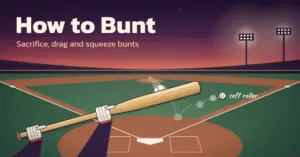
A bunt is one of the most useful small-ball skills in baseball. Instead of taking a full swing, you hold the bat almost still and let the ball tap off it, dropping a soft roller into the infield. Done well, a bunt can push a runner into scoring position or catch a flat-footed defence for a cheap base hit. This guide walks beginners through the grip, stance and bat angle, then explains when to use a sacrifice, drag or squeeze bunt — and the two rules that most often catch new players out. If you are brand new to the sport, it helps to first read up on how to play baseball so the situations below make sense.
What is a bunt in baseball?
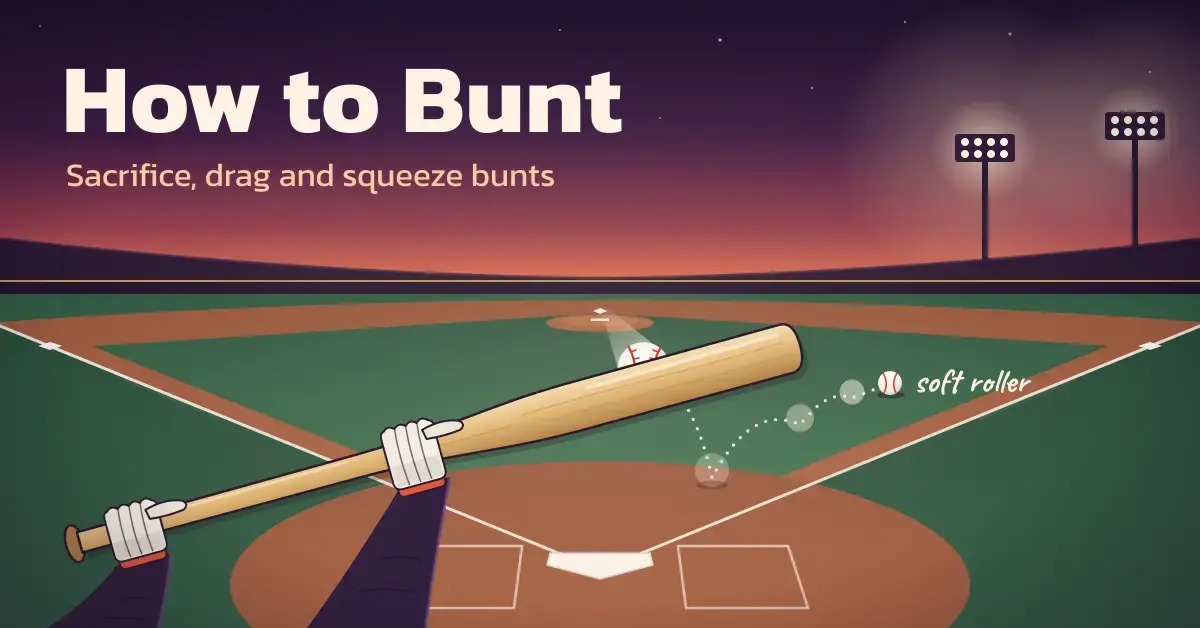
Under the official rules, a bunt is a batted ball that is not swung at but is intentionally met with the bat and tapped slowly within the infield. You are not trying to hit the ball hard — you are trying to deaden it so it rolls a short way and stays in fair territory, forcing a fielder to charge in and make a quick throw.
There are two reasons a batter bunts. The first is to trade an out for a runner: you give yourself up so a team-mate can move to the next base. The second is to beat the ball out for a hit, usually by surprising a defence that is playing deep. Either way, the bunt works because it is unexpected and because a slow roller is genuinely hard to field cleanly and throw in time.
How to bunt: step by step
Most beginners learn the square-around method, where you turn to face the pitcher as the pitch is delivered. Work through these steps slowly before you add any speed:
- Move up in the box. Stand toward the front of the batter’s box so you can meet the ball in front of home plate, before it dips, which also keeps the contact in fair territory.
- Pivot and face the pitcher. As the pitcher begins to deliver, pivot on your back foot to open your hips and bring your chest round toward the mound. Keep both eyes tracking the ball all the way in.
- Split your grip. Keep your bottom hand down near the knob and slide your top hand up toward the middle of the barrel. Pinch the barrel loosely between your thumb and curled fingers, tucking your fingers behind the bat so a pitch cannot smash them. A wider grip helps the bat “catch” and deaden the ball.
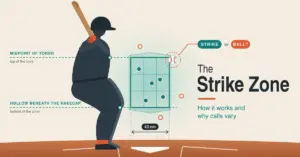
- Set the bat angle. Hold the bat out in front of you around the top of the strike zone, with the barrel tilted slightly upward and your arms extended but your elbows unlocked. Starting at the top of the zone means anything you have to reach up for is probably a ball you should let go.
- Use your legs, not your hands. To bunt a low pitch, bend your knees and lower your whole body rather than dropping the barrel. Dropping the barrel pops the ball up; staying level keeps it on the ground.
- Catch the ball with the bat. Let the ball come to the bat and give a touch with your hands on contact, as if catching an egg. Do not jab, push or stab at it — a soft, giving contact is what makes the ball die in the dirt.
- Aim it. Angle the barrel to steer the ball down a baseline: tilt it toward third base to send the ball that way, or toward first base to push it to the right side. The goal is to make the ball roll away from the nearest fielder.
Quick bunting checklist
- Move up in the batter’s box so you meet the ball in front of the plate.
- Pivot on your back foot and bring your chest toward the pitcher; keep both eyes on the ball.
- Bottom hand near the knob, top hand slid up to the middle of the barrel, fingers tucked safely behind the bat.
- Hold the bat at the top of the strike zone with the barrel angled slightly up.
- Bend your knees for low pitches — never drop the barrel.
- Catch the ball softly with the bat; do not stab or push at it.
- Bunt strikes only, especially with two strikes on you.
Types of bunts
All bunts use the same soft contact, but they are played in different situations and with different goals. The table gives a quick overview, and the sections below explain each one.
Bunt types at a glance
| Bunt | Main goal | Typical situation | Notes |
|---|---|---|---|
| Sacrifice bunt | Advance a runner; accept the out | Runner on base, fewer than two outs | Core beginner skill; square around early |
| Drag bunt | Reach base for a hit | Relies on speed; often no play on | Common for left-handed or fast hitters |
| Push bunt | Beat a charging defence for a hit | Corner fielders crashing in | Firmer contact pushed to the right side |
| Safety squeeze | Score a runner from third | Runner on third waits for a good bunt | Lower risk |
| Suicide squeeze | Score a runner from third | Runner breaks on the pitch | High risk, high reward |
Sacrifice bunt
The sacrifice bunt is the one most beginners learn first. With a runner on base and fewer than two outs, you bunt the ball into the infield knowing you will almost certainly be thrown out at first — but your out moves the runner into scoring position. Because it is a planned give-up, you square around early and prioritise placement over your own speed.
Drag bunt
A drag bunt is a bunt for a base hit. Instead of squaring up early, you show the bunt late and start moving toward first base as you make contact, almost dragging the bat through the ball. It is most common for left-handed and fast hitters, because a left-hander is already moving toward first and gets a head start. The aim is a soft roller the defence cannot reach in time.
Push bunt
A push bunt is also for a hit, but you firm up the contact and push the ball past the charging pitcher toward the right side of the infield. It works when the corner fielders crash in hard expecting a soft bunt; a slightly firmer push rolls into the space they vacate between the pitcher and the first or second baseman.
Squeeze bunt
A squeeze is a sacrifice bunt used specifically to score a runner from third base. There are two versions, and the difference is all about timing and risk:
- Safety squeeze. The runner on third takes a lead but waits until the ball is bunted safely on the ground before breaking for home. It is lower risk — if the bunt is poor, the runner simply holds.
- Suicide squeeze. The runner breaks for home as the pitcher starts the delivery, before contact. If the batter gets the bunt down, the run almost always scores; if the batter misses or pops it up, the runner is usually tagged out or doubled off. High risk, high reward.
You will also hear about a “swinging bunt” — that is not a planned bunt at all, just a weakly hit ball that happens to roll like one — and the slap bunt, which is more common in softball.
Bunting rules every batter should know
Two rules surprise new players, and both are worth memorising before you try a bunt in a game:
- A foul bunt with two strikes is a strikeout. Normally a foul ball cannot be your third strike, but a bunt is the exception. If you already have two strikes and you bunt the ball foul, you are out — so with two strikes you should either commit to a good bunt or pull the bat back and take the pitch.
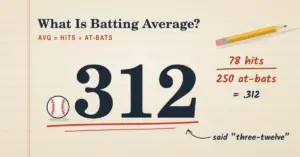
- A sacrifice bunt does not count as an at bat. When you bunt before two outs to advance a runner and are put out, the official scorer records a sacrifice, which does not count as a time at bat and does not lower your batting average. The exception: if the scorer judges you were bunting mainly for a hit rather than to move the runner, you are charged with an at bat instead.
The ball must also end up fair to be a successful bunt. A bunt that rolls foul (and is not caught in the air) is simply a strike, just like any other foul, unless it is that two-strike situation above.
Common bunting mistakes
- Stabbing at the ball. Pushing the bat out at the pitch sends the ball too hard, often straight to a fielder. Let the ball come to you and give with your hands.
- Dropping the barrel. Reaching down for a low pitch by tilting the barrel down almost always pops the ball into the air. Bend your knees instead.
- Squaring too early. Turning to bunt the moment the pitcher looks up tips off the defence, who will charge. Show the bunt as late as you can, especially on a drag bunt.
- Exposing your fingers. Wrapping your fingers around the front of the barrel invites a painful hit. Keep them tucked safely behind the bat.
- Bunting balls out of the zone. Chasing a high or wide pitch leads to pop-ups and weak contact. Start at the top of the zone and only bunt strikes.
Practising your bunt
Bunting rewards repetition more than strength, so it suits backyard and park practice. A simple drill is soft toss: have a partner toss balls underhand from around six metres (about 20 feet) away while you work on catching each one softly and laying it down in fair territory. To train placement, set targets — a cap or a cone — roughly three metres (ten feet) in front of the plate toward first base, the pitcher’s mound and third base, and try to roll bunts to each in turn.
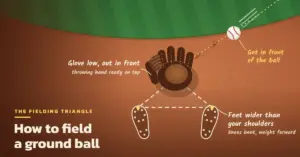
Knowing who you are trying to beat helps, too. The corner infielders and the pitcher charge a bunt, so understanding the fielding positions tells you where the gaps are. For younger players in the Wellington region — where the variable climate means plenty of practice happens on dry days when you can get them — bunting slots neatly into a session alongside other baseball drills for youth players. Once the technique is reliable, work it in with your full-swing hitting tips so you can switch between the two without tipping off the defence.
Sources
Frequently Asked Questions
Is bunting easier than hitting?
The movement is simpler than a full swing, so the basics are quicker to pick up, but a good bunt is not easy. You still have to track the pitch, control the bat angle and place the ball away from fielders under game pressure. Most players find the hardest part is doing it consistently, not learning the motion.
Can you bunt with two strikes?
Yes, you are allowed to attempt a bunt on any count. The catch is that a bunt fouled off with two strikes is a strikeout, unlike an ordinary foul ball. Because of that risk, batters usually only bunt with two strikes if they are confident, and otherwise pull the bat back to take the pitch.
What is the difference between a sacrifice bunt and a bunt for a hit?
A sacrifice bunt is a planned trade — you accept being thrown out so a runner can advance, and it is not charged as an at bat. A bunt for a hit, such as a drag or push bunt, is an attempt to reach base safely, so you show it late and run hard; if you are put out, it counts as a normal at bat.
Is bunting still used in modern baseball?
Yes, though less than it once was. Many teams now value the out they give up on a sacrifice more than they used to, so straight sacrifice bunts are less common at the top level. Bunting for a hit, squeeze plays and bunting against a shifted defence are all still live tactics, and bunting remains a core skill in youth and amateur baseball.