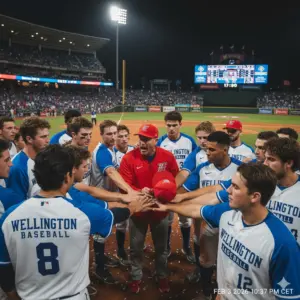

Your first baseball practice is a structured introduction to the sport’s fundamental mechanics, team culture, and the specialized equipment required for the New Zealand summer season. Whether you are joining a youth grade like Kiwi Ball or a social senior league, the session typically begins with dynamic warm-ups and throwing progressions before breaking into skill stations for hitting and fielding. You can expect a professional yet supportive environment where coaches emphasize safety, proper grip, and footwork over raw power. Beyond the physical drills, your first practice serves as a critical orientation for parents and players to learn club etiquette, the "Pitch Smart" safety rules, and the seasonal calendar for the Wellington Baseball Association. By arriving prepared with a broken-in glove, appropriate cleats, and a positive attitude, you set the foundation for a successful and enjoyable diamond sports journey in the capital.
- Dynamic Warm-Up: Practices start with light cardio and stretching to activate muscles and prevent injury.
- Throwing Progression: You will partner up to practice short, controlled tosses, focusing on a four-seam grip and arm alignment.
- Skill Stations: The team often divides into small groups to rotate through hitting (tee work), fielding (grounders), and baserunning drills.
- Equipment Check: Coaches will verify that gear like helmets and bats meet safety certifications (e.g., USA Baseball or BBCOR).
- Game Situations: You may participate in basic scrimmages or situational drills to learn positional responsibilities and "Baseball IQ".
Dynamic Warm-Up: Practices start with light cardio and stretching to activate muscles and prevent injury.
Throwing Progression: You will partner up to practice short, controlled tosses, focusing on a four-seam grip and arm alignment.
Skill Stations: The team often divides into small groups to rotate through hitting (tee work), fielding (grounders), and baserunning drills.
Equipment Check: Coaches will verify that gear like helmets and bats meet safety certifications (e.g., USA Baseball or BBCOR).
Game Situations: You may participate in basic scrimmages or situational drills to learn positional responsibilities and "Baseball IQ".
The Pre-Practice Routine and Initial Orientation
Arriving early for your first baseball practice is essential for a smooth transition into the club environment. In Wellington, where fields like Ian Galloway Park or Ascot Park can be busy, the first few minutes are usually spent checking in with coaches and meeting your teammates. For youth grades, coaches often hold a brief parent meeting to discuss the season's goals, the code of conduct, and volunteer roles like scorekeeping or "Blue Crew" umpiring. This is also when the "Interstate" safety rule is often explained: a strict prohibition against running between a batter and a coach during drills to avoid accidental bat strikes.
Setting Expectations for New Families
The first practice is as much about learning the "unwritten rules" as it is about physical skills. Parents should expect to stay for the duration of the first session to ensure their child settles in and understands the hydration and safety protocols.
- Arrival Time: Aim to be at the diamond 15 minutes before the scheduled start to get geared up.
- Introductions: Coaches will lead a "meet and greet" to build team chemistry and introduce the coaching philosophy.
- Safety Briefing: A walkthrough of the dugout rules, including "helmets on" when batting and proper bat handling.
- Medical Check: Confirm that coaches are aware of any allergies or medical conditions before drills begin.
Arrival Time: Aim to be at the diamond 15 minutes before the scheduled start to get geared up.
Introductions: Coaches will lead a "meet and greet" to build team chemistry and introduce the coaching philosophy.
Safety Briefing: A walkthrough of the dugout rules, including "helmets on" when batting and proper bat handling.
Medical Check: Confirm that coaches are aware of any allergies or medical conditions before drills begin.
| Action | Responsibility | Timing |
| Registration Check | Parent/Coach | Pre-session |
| Gear Fitting | Player/Parent | Arrival |
| Team Huddle | Head Coach | Minute 0 |
| Water Break | All Players | Every 20-30 mins |
Dynamic Warm-Ups and Throwing Progressions
Once the team is gathered, practice officially begins with a dynamic warm-up designed to prime the body for baseball-specific movements. Unlike static stretching, these activities involve light cardio—such as jogging around the bases—combined with arm circles, leg swings, and torso twists. This phase is critical for loosening the shoulders and preparing the legs for the explosive sprints required on the basepaths. Following the cardio, players move into "Playing Catch Practice," which is the foundation of the game.

Building the Foundation of the 'Throw'
Throwing drills start at a short distance (approx. 10 meters) before gradually moving back. Coaches will monitor your grip—ideally a "four-seam" grip where the fingers are across the wide seams—to ensure the ball travels straight and true.
- Arm Circles: Loosening the rotator cuff with small and large circles.
- Leg Activation: High knees and "butt kicks" to prepare the lower body.
- Grip & Snap: Practicing the "flick" of the wrist and proper follow-through across the body.
- Target Focus: Throwing to a partner's chest, which acts as the "bullseye" for accuracy.
Arm Circles: Loosening the rotator cuff with small and large circles.
Leg Activation: High knees and "butt kicks" to prepare the lower body.
Grip & Snap: Practicing the "flick" of the wrist and proper follow-through across the body.
Target Focus: Throwing to a partner's chest, which acts as the "bullseye" for accuracy.
Skill Development and Station Rotation
The core of a Wellington baseball practice is the "Station Rotation," where the team splits into small groups to maximize "reps" and minimize standing around. You will typically spend 10-15 minutes at each station before rotating. This structure allows coaches to give individualized feedback on specific mechanics, such as your hitting stance or your "ready position" in the field. For beginners, these stations are designed to be fun and engaging, often incorporating games like "relay races" to build speed and teamwork.
Core Stations for Beginner Development
Each station targets a fundamental skill that every diamond sport athlete needs to master.
- Hitting Station: You will start with "tee work" to develop a level swing path, potentially progressing to "soft toss" from a coach.
- Fielding Station: Learning the "Alligator" technique for ground balls—where the glove acts as the bottom jaw and the bare hand as the top.
- Baserunning Station: Practicing a "straight-line" sprint to first base and learning how to "round the bag" toward second.
- Throwing/Catching: Refining the "Aim-Ready-Throw" sequence and learning to secure the ball with two hands.
Hitting Station: You will start with "tee work" to develop a level swing path, potentially progressing to "soft toss" from a coach.
Fielding Station: Learning the "Alligator" technique for ground balls—where the glove acts as the bottom jaw and the bare hand as the top.
Baserunning Station: Practicing a "straight-line" sprint to first base and learning how to "round the bag" toward second.
Throwing/Catching: Refining the "Aim-Ready-Throw" sequence and learning to secure the ball with two hands.
| Station | Focus Skill | Key Drill Example |
| Infield | Ground Balls | The “Alligator” Drill |
| Outfield | Fly Balls | Tracking and Communication |
| Hitting | Swing Path | Batting Tee Work |
| Base Path | Speed/Safety | Running through 1st Base |
Hitting Fundamentals: From the Tee to the Box
Hitting is often the highlight of practice, but at your first session, the focus is on balance and contact rather than power. You will likely start with "Tee Work," hitting a stationary ball to reinforce a proper stance with feet shoulder-width apart. Coaches will watch for "squishing the bug"—the rotation of the back foot during the swing—which indicates proper hip engagement. As you gain confidence, you may move to "Front Toss," where a coach throws underhand from behind a protective screen to help you time a moving ball.

Understanding the 'Power Position'
Coaches will introduce the "Power Position," which is the brief moment before the swing when your hands are back and your body is "loaded" like a spring.
- Grip: Holding the bat firmly but relaxed in the fingers, not the palms.
- Balance: Keeping the head still and eyes on the ball throughout the entire swing.
- Follow-Through: Ensuring the bat completes its path and the chest finishes square to the field.
- Pitch Recognition: Learning to identify the "strike zone"—the area between the shoulders and knees over home plate.
Grip: Holding the bat firmly but relaxed in the fingers, not the palms.
Balance: Keeping the head still and eyes on the ball throughout the entire swing.
Follow-Through: Ensuring the bat completes its path and the chest finishes square to the field.
Pitch Recognition: Learning to identify the "strike zone"—the area between the shoulders and knees over home plate.
Defensive Positioning and Positional IQ
During the latter half of practice, you will begin to learn where to stand on the diamond. Baseball utilizes nine defensive positions, each with a specific number (e.g., Pitcher is 1, Shortstop is 6). Your first practice will cover the "Ready Position": knees slightly bent, weight on the balls of your feet, and glove ready to react. Coaches will hit "mass ground balls" or fly balls to the team, calling out situations like "play at first!" to help you understand where the ball should be thrown after it is fielded.
The Nine Standard Positions
Learning your position's number is essential for understanding the coach's signals and scorekeeping.
- 1: Pitcher (P) – Located on the mound side.
- 2: Catcher (C) – Behind home plate.
- 3: First Base (1B) – Receives most force-out throws.
- 4: Second Base (2B) – Guards the right side of second base.
- 5: Third Base (3B) – The "Hot Corner" on the left side.
- 6: Shortstop (SS) – The captain of the infield, between 2nd and 3rd.
- 7, 8, 9: Outfielders – Covering Left, Center, and Right field.
1: Pitcher (P) – Located on the mound side.
2: Catcher (C) – Behind home plate.
3: First Base (1B) – Receives most force-out throws.
4: Second Base (2B) – Guards the right side of second base.
5: Third Base (3B) – The "Hot Corner" on the left side.
6: Shortstop (SS) – The captain of the infield, between 2nd and 3rd.
7, 8, 9: Outfielders – Covering Left, Center, and Right field.
| Position Number | Name | Primary Responsibility |
| 1 | Pitcher | Delivering the ball to the plate |
| 3 | First Base | Recording outs at the initial bag |
| 6 | Shortstop | Covering the wide gap in the infield |
| 8 | Center Field | Tracking long fly balls in the middle |
Baserunning Rules and Proper Technique
Baserunning is one of the most exciting parts of your first practice, but it is also governed by strict rules. You will practice "running through" first base—sprinting past the bag rather than stopping on it—which is the fastest way to reach safety on a ground ball hit. For other bases, you will learn "sliding" techniques to avoid being tagged out by a fielder. In Wellington's competitive junior grades, coaches will also introduce "rounding the bag," which involves taking a curved path to maintain speed when you intend to advance toward second base.

Important Baserunning Rules to Remember
A runner must touch every base in order (1st, 2nd, 3rd, then Home) to score a run.
- No Passing: You cannot pass the teammate in front of you on the basepaths.
- Stay in the Baseline: You must stay within three feet of the direct line between bases to avoid being called out.
- Helmets On: You are never allowed to remove your batting helmet while running the bases.
- Tagging Up: Learning to wait on the base until a fly ball is caught before sprinting to the next one.
No Passing: You cannot pass the teammate in front of you on the basepaths.
Stay in the Baseline: You must stay within three feet of the direct line between bases to avoid being called out.
Helmets On: You are never allowed to remove your batting helmet while running the bases.
Tagging Up: Learning to wait on the base until a fly ball is caught before sprinting to the next one.
Pitching and Catching: The Specialized Battery
For players interested in the "Battery" positions (Pitcher and Catcher), a portion of the practice may be dedicated to specialized bullpen sessions. Aspiring pitchers will practice a balanced windup and consistent release point, often throwing at targets like buckets or nets to build muscle memory. Catchers will work on "Blocking Basics," learning how to drop to their knees and use their bodies to stop low pitches from getting past them. These roles require the most equipment and focus, as they control the pace of every inning.
The 'Pitch Smart' Philosophy in NZ
Wellington clubs strictly follow safety guidelines to prevent "overuse" injuries in young arms.
- Balance Drill: Practicing holding your leg lifted at the top of the motion to improve control.
- Target Throwing: Aiming for specific areas of the strike zone net rather than just throwing hard.
- Throwdowns: Catchers practice the transition from a crouch to a quick throw toward second base.
- Safety First: Pitchers and catchers are often monitored for "pitch counts" to ensure they don't over-exert themselves.
Balance Drill: Practicing holding your leg lifted at the top of the motion to improve control.
Target Throwing: Aiming for specific areas of the strike zone net rather than just throwing hard.
Throwdowns: Catchers practice the transition from a crouch to a quick throw toward second base.
Safety First: Pitchers and catchers are often monitored for "pitch counts" to ensure they don't over-exert themselves.
| Skill | Focus Area | Goal |
| Pitching | Balance & Form | Throwing strikes consistently |
| Catching | Blocking | Preventing “wild pitches” |
| Catching | Pop-up Time | Quickness on steals |
| Pitching | Sequence | Fastballs vs. Changeups |
Essential Gear: What You Need to Bring
While your Wellington club may provide team bats and helmets, there are several personal items you must bring to your first practice to stay safe and comfortable. The most important item is a baseball glove, ideally one that has been "broken in" so it can close easily. You should also wear comfortable athletic clothing—long-sleeved shirts are recommended for Wellington's cooler spring mornings to protect the arms. For footwear, molded plastic cleats are standard for grass diamonds; however, sneakers are often used for indoor cage sessions.
Your First Practice Checklist
Being fully equipped helps you focus on the drills rather than searching for gear.
- Baseball Glove: Sized appropriately for your hand (not too big!).
- Athletic Support: Mandatory for all boys in competitive divisions.
- Water Bottle: Staying hydrated is critical, even in cooler weather.
- Protective Helmet: If you have your own, ensure it is NOCSAE certified.
- Baseball Pants: Recommended over shorts to protect your legs during fielding and sliding.
Baseball Glove: Sized appropriately for your hand (not too big!).
Athletic Support: Mandatory for all boys in competitive divisions.
Water Bottle: Staying hydrated is critical, even in cooler weather.
Protective Helmet: If you have your own, ensure it is NOCSAE certified.
Baseball Pants: Recommended over shorts to protect your legs during fielding and sliding.
| Item | Status | Purpose |
| Glove | Mandatory | Fielding the ball safely |
| Cup/Protector | Mandatory (Boys) | Vital safety equipment |
| Cleats | Recommended | Traction on grass/dirt |
| Bat | Often Provided | Hitting practice |
Club Etiquette and Sportsmanship
Baseball is a game defined by both official rules and "unwritten" etiquette. At your first practice, coaches will emphasize respect for the umpires, your teammates, and the opposing players. In Wellington, the "Canterbury Etiquette" standards are often adopted, encouraging a positive atmosphere where every effort is celebrated. This includes simple habits like "hustling" (running everywhere on the field) and keeping the dugout organized and free of distractions.
The Core Values of the Diamond
Sportsmanship is a "life skill" that Wellington clubs value as much as batting averages.
- Respecting the Umpire: Never arguing balls and strikes—showing maturity on the field.
- Positive Reinforcement: Cheering for your teammates after a good play or a hard-fought at-bat.
- Teamwork: Learning to back up your teammates during relay plays or overthrows.
- Communication: Loudly calling for balls in the outfield to avoid collisions.
Respecting the Umpire: Never arguing balls and strikes—showing maturity on the field.
Positive Reinforcement: Cheering for your teammates after a good play or a hard-fought at-bat.
Teamwork: Learning to back up your teammates during relay plays or overthrows.
Communication: Loudly calling for balls in the outfield to avoid collisions.
Wrapping Up: Closing Comments and Water Breaks
The practice typically concludes with a light "cool down" and a brief team meeting. Coaches will use this time to recap the skills learned, announce the next practice date, and perhaps lead a team cheer to finish on a high note. This is also the time to ask questions about anything you found confusing during the session. For youth players, it’s a chance to decide on team names or social events, fostering a sense of belonging within the Wellington baseball community.
Final Steps Before You Head Home
Ensure you have all your personal belongings and help the coaches "pack down" the shared equipment.
- Water Break: Final hydration and a chance to socialize with new teammates.
- Recap: Reflecting on the "fundamentals of the day," such as proper stance or throwing form.
- Clean the Yard: Helping to pick up balls and equipment as a sign of respect for the field.
- Next Steps: Checking the team app or email for upcoming game or training updates.
Water Break: Final hydration and a chance to socialize with new teammates.
Recap: Reflecting on the "fundamentals of the day," such as proper stance or throwing form.
Clean the Yard: Helping to pick up balls and equipment as a sign of respect for the field.
Next Steps: Checking the team app or email for upcoming game or training updates.
Final Thoughts
Your first baseball practice is the beginning of a rewarding journey into one of New Zealand's most dynamic summer sports. While the specialized equipment and complex rules may seem overwhelming at first, the session is designed to break everything down into manageable, fun segments. By focusing on the fundamentals of the "Ready Position," the four-seam grip, and a level swing path, you develop the muscle memory needed for long-term success. Remember that every elite player in the Diamondblacks started with a single practice just like this one, learning how to "squish the bug" and run through first base. Stay hydrated, listen to your coaches, and above all, enjoy the process of mastering the diamond.
FAQ section
What if I don't have a baseball glove yet?
Most clubs have "loaner" gloves available for the first session; however, it is highly recommended to purchase your own soon so you can break it in.
Is there a specific type of bat I should buy for my child?
Yes. Juniors up to age 12 must use bats with the "USA Baseball" stamp. Older youth grades (U13+) often transition to "BBCOR" certified bats.
How long does a standard practice last in Wellington?
Practice duration varies by age group: 60 minutes is common for Little League, while older youth and seniors may practice for up to 2 hours.
Can I wear rugby boots to baseball practice?
While they provide grip, molded baseball-specific cleats are preferred. Metal spikes are strictly prohibited for all junior grades.
What is 'Kiwi Ball'?
Kiwi Ball is the introductory grade for younger children in NZ (approx. 5-8 years), focusing on fundamental motor skills through fun, modified games.
Do parents need to stay at the practice?
For younger youth grades, it is strongly encouraged for parents to stay to assist with safety and learn the drills alongside their child.
What happens if it rains in Wellington on practice day?
Wellington clubs typically communicate "rain-out" notices via team apps or social media at least an hour before the session starts.
What is 'The Blue Crew'?
This is the nickname for the trained umpires who officiate games and enforce sportsmanship rules in the Wellington region.
Do I need to be fit to start baseball?
Baseball is inclusive of all fitness levels. Practices include cardio, but the primary focus is on skill development and strategic thinking.
How do I join a club in Wellington?
Visit the official Wellington Baseball Association or regional club websites to register through the GameDay portal.
1 DO FOLLOW EXTERNAL LINK – Find link to Wiki page for keyword in the specific geo For more information on the history and governance of the sport in New Zealand, visit the Baseball New Zealand Wikipedia page.