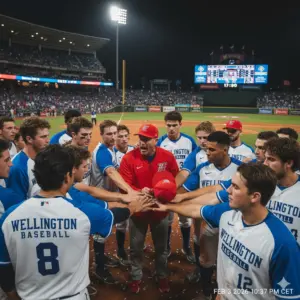

Baseball skills & development in New Zealand focuses on a structured national player pathway that transitions athletes from grassroots "Kiwi Ball" to elite international representative levels. This comprehensive guide covers the essential technical foundations of hitting, pitching, and fielding, while detailing the specialized coaching frameworks established by Baseball New Zealand to nurture talent across regional hubs like Wellington and Auckland. By mastering core mechanics—such as the rotational swing, four-seam grip, and situational base running—Kiwi players can advance through age-appropriate divisions (12U, 14U, 16U) toward high-performance squads like the Diamondblacks. Whether you are a beginner learning the "alligator hands" technique or an advanced player refining velocity and mental resilience, this roadmap provides the actionable drills, statistical standards, and developmental milestones necessary to excel in the competitive Southern Hemisphere summer season.
- National Player Pathway: A decentralized development model established by Baseball NZ to provide tailored journeys for emerging talent and elite squad athletes.
- Fundamental Skills: Mastery of throwing grip, balanced batting stances, and tracking pop flies forms the base of all beginner development.
- Position Specialization: Progression into specialized roles like the "battery" (pitcher/catcher) or middle infield requires specific footwork and reaction drills.
- Coaching Infrastructure: A dual focus on community and performance coaching ensures high-quality instruction from grassroots to the national performance squad.
- Statistical Development: Competitive youth grades utilize digital tracking and slow-motion video capabilities for precise player feedback and national identification.
National Player Pathway: A decentralized development model established by Baseball NZ to provide tailored journeys for emerging talent and elite squad athletes.
Fundamental Skills: Mastery of throwing grip, balanced batting stances, and tracking pop flies forms the base of all beginner development.
Position Specialization: Progression into specialized roles like the "battery" (pitcher/catcher) or middle infield requires specific footwork and reaction drills.
Coaching Infrastructure: A dual focus on community and performance coaching ensures high-quality instruction from grassroots to the national performance squad.
Statistical Development: Competitive youth grades utilize digital tracking and slow-motion video capabilities for precise player feedback and national identification.
Establishing Foundational Baseball Mechanics in New Zealand
Developing a robust base of baseball skills & development begins with the "Big Four" fundamentals: throwing, catching, hitting, and fielding. For beginners in the Wellington region, practitioners recommend dedicating 15–20 minutes to each core skill during training sessions to build muscle memory without fatigue. The initial focus is on grip and mechanics, such as holding the ball with fingertips across the seams rather than buried in the palm to ensure accuracy and consistent rotation. This stage is often referred to as the "National Participation Framework," where the primary goal is fostering a lifelong love for the game through fun, high-repetition drills like relay races or hitting off a tee.
Mastering the Four-Seam Throwing Grip
The four-seam grip is the most vital fundamental to learn early, as it provides the straightest and most consistent ball flight. Players should be taught to step directly toward their target, rotate their hips and shoulders in a synchronized "whip" motion, and follow through after the release to protect their arm health. Daily accuracy practice is considered one of the most important elements of Kiwi player progression.
- Step Toward Target: Ensures all momentum is directed toward the receiver.
- Hip/Shoulder Rotation: Generates power from the lower body rather than just the arm.
- Fingertip Grip: Prevents "sailing" or erratic ball movement caused by palming.
- Follow Through: Essential for long-term injury prevention and throwing velocity.
Step Toward Target: Ensures all momentum is directed toward the receiver.
Hip/Shoulder Rotation: Generates power from the lower body rather than just the arm.
Fingertip Grip: Prevents "sailing" or erratic ball movement caused by palming.
Follow Through: Essential for long-term injury prevention and throwing velocity.
| Throwing Component | Focus Area | Developmental Goal |
| Grip | Across the seams | Maximise ball rotation and flight stability |
| Stride | In-line with target | Ensure accuracy and energy transfer |
| Arm Path | High elbow/extension | Prevent shoulder strain and increase velocity |
Technical Hitting Progressions: From Tee Work to Live BP
Hitting is often cited as the hardest task in sports, requiring a blend of hand-eye coordination and explosive core power. In the context of baseball skills & development, hitters are taught to maintain a balanced stance with weight evenly distributed and eyes level throughout the entire swing. Advanced drills like the "Happy Gilmore" drill help players understand how to use momentum to enhance batting power by stepping into the box and planting the front foot into a "power position" before driving through the ball. For Kiwi youth, using tees removes the variable of a moving ball, allowing them to focus exclusively on hip rotation and bat control.

Advanced Hitting Drills for Power Generation
Once basic contact is established, players move into situational hitting drills. The "Heavy Bag Drill" is a popular high-performance exercise where players hit a weighted bag to force core engagement and powerful hip movement. Additionally, "One-Handed Swings" are used to strengthen forearms and refine the path of the bat through the hitting zone.
- Batting Tee Work: Essential for isolating swing mechanics and fixing loopy hand paths.
- Soft Toss: Introduces timing and barrel control with controlled underhand movement.
- Situational BP: Simulates real-game scenarios like hitting behind a runner or a full-count approach.
- Video Analysis: Utilizing slow-motion capabilities to identify "leaks" in energy during the load phase.
Batting Tee Work: Essential for isolating swing mechanics and fixing loopy hand paths.
Soft Toss: Introduces timing and barrel control with controlled underhand movement.
Situational BP: Simulates real-game scenarios like hitting behind a runner or a full-count approach.
Video Analysis: Utilizing slow-motion capabilities to identify "leaks" in energy during the load phase.
| Hitting Level | Recommended Drill | Target Outcome |
| Beginner | Batting Tee Variations | Muscle memory and level swing plane |
| Intermediate | Two-Ball Soft Toss | Improved pitch recognition and tracking |
| Advanced | Happy Gilmore Drill | Maximizing ground force and rotational power |
Defensive Mastery: Infield and Outfield Specialization
Defensive prowess in baseball skills & development is divided between the quick-twitch requirements of the infield and the tracking abilities of the outfield. Infielders utilize the "Triangle Method" and "Alligator Hands" to secure ground balls, ensuring they stay low and field the ball out in front of their body. Meanwhile, outfielders focus on the "Drop Step" and "Zig-Zag Drill" to improve their lateral range and ability to track long fly balls under the windy conditions often found at New Zealand parks. Communication is the final link, with players taught to call "Mine!" or "Ball!" loudly to avoid collisions.
Building Soft Hands through Short Hops
The "Rapid Fire" drill is used for developing quick hands and transition speed. Players field multiple grounders in quick succession, focusing on "funnelling" the ball to their midsection for a faster transfer to their throwing hand. This is paired with "Backhand Drills" to help infielders handle tough grounders hit deep to their glove side.
- Alligator Hands: Using two hands to secure the ball and transition quickly.
- Pop Fly Priorities: Learning specific communication rules to determine who catches what.
- Relay Throws: Mastering the turn-and-throw motion required for long outfield-to-home plays.
- Grounder Progression: Starting with slow rollers and gradually increasing speed and hop unpredictability.
Alligator Hands: Using two hands to secure the ball and transition quickly.
Pop Fly Priorities: Learning specific communication rules to determine who catches what.
Relay Throws: Mastering the turn-and-throw motion required for long outfield-to-home plays.
Grounder Progression: Starting with slow rollers and gradually increasing speed and hop unpredictability.
| Fielding Position | Key Drill | Core Attribute Developed |
| Infielder | Ground Ball Shufflers | Lateral movement, balance, and staying low |
| Outfielder | Zig-Zag Tracking | Range, first-step quickness, and tracking |
| Any | Hot Potato (Toss) | Hand-eye coordination and reaction time |
The Pitching Battery: Velocity and Arm Care Protocols
Pitching is the engine of the game, and its development in New Zealand is governed by strict safety and mechanical standards. The "Towel Drill" is a staple in many Kiwi clubs, allowing players to practice their full pitching motion and arm extension using a towel instead of a ball to reduce stress on the arm. High-performance academies focus on "Flamingo Balancing" to build the one-legged stability needed for a powerful leg drive and consistent release point. Furthermore, Baseball NZ emphasizes injury prevention through proper warm-ups and adherence to "Pitch Smart" guidelines.

Precision over Velocity for Youth Development
For pre-teens (11–13), the focus remains on form and accuracy rather than raw pitch speed. Players use target practice in the bullpen, aiming at buckets or specific markers to develop "command" of the strike zone. This foundational accuracy is considered more valuable for future senior prospects than early-onset velocity.
- Four-Seam Grip: The baseline for every pitcher starting their developmental journey.
- Leg Lift Mechanics: Building ground force by "sitting" into the back hip during the windup.
- Shoulder Mobility: Incorporating resistance bands and specific stretches to maintain flexibility.
- Mental Focus: Mimicking game-day pressure during bullpen sessions to build situational awareness.
Four-Seam Grip: The baseline for every pitcher starting their developmental journey.
Leg Lift Mechanics: Building ground force by "sitting" into the back hip during the windup.
Shoulder Mobility: Incorporating resistance bands and specific stretches to maintain flexibility.
Mental Focus: Mimicking game-day pressure during bullpen sessions to build situational awareness.
| Pitching Phase | Key Mechanic | Strategic Benefit |
| Windup | Balanced stance/knee lift | Repeatable delivery and consistency |
| Drive | Pushing off the rubber | Generating maximum ground force |
| Release | Consistent arm slot | Deception and improved strike-zone command |
Baserunning IQ and Explosive Speed Drills
Effective baserunning can often win games in the lower-scoring junior grades. Baseball skills & development include teaching players to run through first base into foul territory and to aim for the inside corner of the bags to maintain speed while rounding. In the competitive teenage divisions, players must master "Lead-offs" and "Reading the Pitcher" to anticipate pick-off moves or steals. Agility ladder drills and short shuttle runs are common in New Zealand training plans to build the "first-step" quickness needed for successful stealing.
Navigating the Base Paths with Speed
The ideal path around the bases is rarely a straight line. Players are drilled on "Base Path Navigation," learning when to take a direct line and when to round a corner with speed and control to avoid a tag.
- Sprint Through 1st: Preventing an easy out by never slowing down before the bag.
- Tagging Up: Understanding the "fly ball fly rules" for when to stay and when to go.
- Sliding Technique: Practicing safe, smooth slides into home or when stealing bases on soft surfaces.
- Coach Signals: Learning the visual hand signs for stopping, sliding, or turning for the next base.
Sprint Through 1st: Preventing an easy out by never slowing down before the bag.
Tagging Up: Understanding the "fly ball fly rules" for when to stay and when to go.
Sliding Technique: Practicing safe, smooth slides into home or when stealing bases on soft surfaces.
Coach Signals: Learning the visual hand signs for stopping, sliding, or turning for the next base.
| Baserunning Goal | Training Focus | Common Mistake |
| Extra Bases | Inside-corner rounding | Rounding too wide (losing time) |
| Stealing | Quick-start/reaction | Watching the ball instead of the pitcher |
| Scoring | Safe slide technique | Stopping or standing up before the plate |
The National Player Pathway: From Grassroots to Performance
Baseball NZ has evolved its National Player Pathway to create a clearer roadmap for athletes aiming for national representative honors. This decentralized model focuses on "contact points," using regional hubs to provide individually tailored developmental journeys. Players typically enter the pathway through local club leagues or Little League, where they are identified at national tournaments and invited to selection camps held three times annually (February, April, and October). This system is designed to prepare Kiwi athletes for the rigors of international competition and potentially collegiate scouting in the US.

National Development vs. Performance Squads
The pathway is split into two primary phases: development and performance. The "National Development Squad" focuses on refining technical skills during a 12-week off-season program, while the "National Performance Squad" shifts to a 16-week high-intensity program focused on "training to perform".
- Participation Phase: Foundational skills and fostering a love for the game.
- Identification Phase: Competing at national events to be scouted for squad selection.
- Performance Phase: Intensive monitoring through digital platforms and elite regional coaching.
- Representative Goals: Selection for age-grade teams (NZ U15, U16) and the senior national program.
Participation Phase: Foundational skills and fostering a love for the game.
Identification Phase: Competing at national events to be scouted for squad selection.
Performance Phase: Intensive monitoring through digital platforms and elite regional coaching.
Representative Goals: Selection for age-grade teams (NZ U15, U16) and the senior national program.
| Pathway Stage | Duration | Core Focus |
| Development Squad | 12-Week Pre-season | Technical refinement and game IQ |
| Performance Squad | 16-Week Program | Strength/Conditioning, mental skills, nutrition |
| National Teams | Annual Cycle | International tournaments and Oceania qualifiers |
Coaching Frameworks: Nurturing the Kiwi Baseball Talent
The success of baseball skills & development relies heavily on the quality of instruction at every level. Baseball NZ’s strategic plan for 2024–2026 focuses on building a robust coach development framework that nurtures both community and performance coaches. Coaches are encouraged to use a "Constraints-Based" approach, where training sessions are modified (e.g., using smaller boundaries or different point systems) to challenge athletes at appropriate levels and induce a "Flow State" of learning. Regional hub coaches provide personalized feedback and technical instruction aligned with the national philosophy.
Creating Safe and Inclusive Learning Environments
A key challenge for New Zealand coaches is working with varying skill levels within the same team. Effective instructors distribute their positive attention evenly, ensuring that "less skillful" athletes do not feel overlooked or believe that elite ability is unobtainable.
- Growth Mindset: Encouraging players to embrace risk and failure as a necessary part of the learning journey.
- Situational Baseball: Using mini-games like "Situation Baseball" to let players figure out tactical problems themselves.
- Age-Appropriate Progressions: Knowing exactly what to teach and when based on biological and training age.
- Holistic Development: Balancing technical training with mental health, performance nutrition, and resilience.
Growth Mindset: Encouraging players to embrace risk and failure as a necessary part of the learning journey.
Situational Baseball: Using mini-games like "Situation Baseball" to let players figure out tactical problems themselves.
Age-Appropriate Progressions: Knowing exactly what to teach and when based on biological and training age.
Holistic Development: Balancing technical training with mental health, performance nutrition, and resilience.
| Coaching Role | Impact Area | Primary Resource |
| Community Coach | Grassroots retention | WBSC manuals and Rookie Sox plans |
| Hub Coach | Technical instruction | Regional performance clinics |
| Performance Coach | Elite athlete outcomes | National selection camps and technology |
Strength, Conditioning, and Athlete Wellbeing
Modern baseball skills & development require more than just on-field drills; they require a "holistic" approach to the athlete. For youth players (7–10), the focus is on body awareness and basic movements using their own body weight, while pre-teens (11–13) begin more structured training with light resistance bands. Core strengthening exercises like planks, medicine ball workouts, and "Bird Dogs" are incorporated into practices to build a stable foundation for balance and rotational explosive power. Additionally, performance nutrition and recovery strategies (sleep, mobility, strength) are critical for long-term athletic success.

Core Builders for Kiwi Baseballers
Strength underpins explosive power and provides the "physical presence" required for international competition. Stability in the core translates directly into balance on the mound and velocity at the plate.
- Planks (Front/Side): Essential for maintaining a stable torso during the swing.
- Superman Holds: Strengthening the lower back to support rotational movement.
- Dynamic Warm-Up: Includes arm circles, hip rotations, and leg swings before every practice.
- Static Post-Practice Stretch: Teaching hip flexor and hamstring stretches for active recovery.
Planks (Front/Side): Essential for maintaining a stable torso during the swing.
Superman Holds: Strengthening the lower back to support rotational movement.
Dynamic Warm-Up: Includes arm circles, hip rotations, and leg swings before every practice.
Static Post-Practice Stretch: Teaching hip flexor and hamstring stretches for active recovery.
| Strength Focus | Exercise Example | Benefit to Baseball |
| Core Stability | Medicine Ball Slams | Improved rotational power and balance |
| Shoulder Health | Resistance Band Pulls | Prevention of rotator cuff injuries |
| Leg Explosiveness | Standing Jumps | Increased sprinting speed and pitching drive |
Mental Resilience and Game Awareness Strategies
Baseball is famously described as a game of failure, and developing mental resilience is a core pillar of baseball skills & development. Coaches in New Zealand utilize visualization techniques, encouraging players to imagine successful plays and positive outcomes to build confidence. Mindfulness practices, such as breathing exercises, are introduced to help young athletes manage game-day anxiety. Furthermore, situational awareness—understanding why a play is made—is developed through reviewing past games (MLB, high school, or college) and discussing the strategies applied.
Building a Resilient Team Culture
Celebrating individual successes and teamwork boosts morale and helps players handle the psychological pressure of a season. Resilience is defined as the ability to "embrace unfairness" on the diamond and maintain professional behavior under pressure.
- Goal Setting: Helping players set achievable short- and long-term milestones.
- Role-Playing: Encouraging players to understand every position on the field to foster appreciation for teammates.
- Handling Failure: Teaching players how to process winning and losing with grace.
- Resilience Drills: Creating high-pressure practice scenarios where failure is likely, to build mental toughness.
Goal Setting: Helping players set achievable short- and long-term milestones.
Role-Playing: Encouraging players to understand every position on the field to foster appreciation for teammates.
Handling Failure: Teaching players how to process winning and losing with grace.
Resilience Drills: Creating high-pressure practice scenarios where failure is likely, to build mental toughness.
| Mental Tool | Application | Objective |
| Visualization | Pre-game/Dugout | Build confidence through mental imagery |
| Mindfulness | Between pitches | Manage anxiety and maintain focus |
| Situational Analysis | Practice debriefs | Sharpen tactical IQ and decision-making |
Tournament Play and Representative Identification
National tournaments are the high-stakes venues where baseball skills & development are put to the ultimate test. These events provide concentrated coaching and opportunities for players to compete in high-pressure environments. Competing at national club championships or Little League regionals is the critical factor for identification and selection into the national performance pathway. Elite athletes are evaluated on physical presence, foot speed, and tactical adaptability, with national squads selected annually.

The Pathway to International Exposure
For many, the goal is reaching the US collegiate level. Programs like "DownUnder Travellers" offer developmental pathway programs that provide college exposure and purpose-built structure for athletes who want to prepare for the next step beyond New Zealand.
- Little League Regionals: The starting point for many families in the competitive cycle.
- National Championships: The primary scouting venue for regional and national selectors.
- International Qualifiers: Oceania and Asian-Pacific tournaments for top age-grade teams.
- College Exposure: Utilizing measurables (height, sprint speed) to attract international interest.
Little League Regionals: The starting point for many families in the competitive cycle.
National Championships: The primary scouting venue for regional and national selectors.
International Qualifiers: Oceania and Asian-Pacific tournaments for top age-grade teams.
College Exposure: Utilizing measurables (height, sprint speed) to attract international interest.
| Tournament Level | Primary Purpose | Key Evaluator |
| Club Nationals | Identify regional depth | National Performance Coaches |
| Representative Play | Showcase elite talent | International Scouts / BBNZ |
| Selection Camps | Performance testing | National Squad Managers |
Final Thoughts
The development of elite baseball skills & development in New Zealand is an evolving science that blends international high-performance standards with a tight-knit community spirit. By prioritizing mechanical foundations early in the Participation Framework, players build the "Baseball IQ" and physical resilience necessary to succeed as they transition into the National Performance Pathway. The dedication of volunteer coaches, the implementation of decentralized regional hubs, and the use of modern statistical tracking ensure that every player has a clear roadmap toward national representative honors or college dreams. As the sport continues to grow, the focus remains on nurturing the "athlete as a whole"—balancing technical mastery with mental resilience, nutrition, and lifelong sportsmanship on the diamond.
Frequently Asked Questions
What are the core baseball skills for beginners in NZ?
The four core skills are throwing (grip and mechanics), catching (tracking and hand position), hitting (stance and contact), and fielding (ready position and grounders).
How can youth players improve their batting power?
Power comes from the lower body. Drills like the Happy Gilmore or hitting a weighted heavy bag help players engage their hips and core for more explosive swings.
What is the New Zealand National Player Pathway?
It is a decentralized model designed to roadmap success from Little League to national squads and college opportunities, involving identification at national tournaments.
When should position specialization begin?
While younger players rotate roles, specialization usually intensifies during pre-teen years (ages 11–13) as players move into performance squads and representative pathways.
What is the "Alligator Hands" technique?
It is a fielding method where the glove hand acts as the bottom jaw and the bare hand as the top jaw to secure ground balls quickly and safely.
Are there specific safety rules for youth pitchers?
Yes, Baseball NZ adheres to "Pitch Smart" guidelines that mandate strict daily pitch counts and mandatory rest periods to prevent arm injuries.
How are national baseball squads selected in NZ?
Selection is based on performance at national tournaments, as well as testing at national selection camps held three times a year in February, April, and October.
What is a "Constraints-Based" coaching approach?
It is a method where coaches modify the environment (e.g., using smaller boundaries or rules) to challenge athletes and promote problem-solving and technical adaptation.
Can I play baseball if I have never played before?
Absolutely. Regional hubs and clubs like Wellington City Pirates offer development programs (Kiwi Ball) specifically designed for absolute beginners to learn fundamental motor skills.
What footwear is recommended for junior baseball?
Molded plastic cleats or rubber-soled turf shoes are recommended for most junior grass fields to provide traction without the injury risk of metal spikes.
1 DO FOLLOW EXTERNAL LINK: Find more about the history and rules of the sport on the Baseball New Zealand Wikipedia page.