
Baseball drills for youth players NZ

Implementing effective baseball drills for youth players NZ is essential for developing the next generation of Kiwi diamond talent, focusing on fundamental skill acquisition, athletic coordination, and a deep understanding of game-day strategy. This comprehensive guide details a structured approach to coaching, from "Kiwi Ball" basics to advanced representative-level mechanics, specifically tailored for the New Zealand club environment. We explore high-repetition drills for hitting, pitching, and fielding that can be executed on local grass diamonds, along with specialized advice for indoor winter training in Wellington. By following this roadmap, coaches and parents can provide young athletes with a professional-grade developmental experience that emphasizes incremental progress, safety through strict pitch-count adherence, and a passion for the sport that lasts well beyond the summer season.

The primary objective of youth training in New Zealand is to transition players from basic hand-eye coordination to specialized positional mastery. Because many local athletes come from a rugby or cricket background, drills must focus on "unlearning" vertical swing paths and adopting the rotational power unique to baseball. Successful sessions in Wellington typically involve short, high-energy rotations that prevent boredom and maximize "touches" on the ball. Whether you are operating out of Ian Galloway Park or a school field, the emphasis should always be on "quality over quantity," ensuring that every repetition builds correct muscle memory and prevents the development of long-term mechanical flaws.

  • Foundation First: Prioritise proper throwing mechanics and footwork before introducing competitive speed.
  • Rotation Logic: Use station-based training to keep groups small and maximize coaching feedback.
  • Gamification: Incorporate "game-like" pressure into drills to help players handle nerves during actual league play.
  • Adaptability: Adjust drills based on age grades, moving from stationary tees to live-arm pitching as skills evolve.

Foundation First: Prioritise proper throwing mechanics and footwork before introducing competitive speed.

Rotation Logic: Use station-based training to keep groups small and maximize coaching feedback.

Gamification: Incorporate "game-like" pressure into drills to help players handle nerves during actual league play.

Adaptability: Adjust drills based on age grades, moving from stationary tees to live-arm pitching as skills evolve.

Mastering the Batting Tee for Mechanical Precision

The batting tee is often misunderstood as a "beginner-only" tool, but it is actually the most important piece of equipment for baseball drills for youth players NZ at all levels. Tee work allows a hitter to focus entirely on their body mechanics—such as hand path, hip rotation, and head stability—without the distraction of a moving ball. For New Zealand youth, the focus should be on creating a "short-to-long" swing: staying compact to the ball and extending through the hitting zone. Coaches should emphasize hitting the "inside half" of the ball to encourage a gap-to-gap hitting approach, which is far more effective in local junior leagues than swinging for the fences.

The 'Inside-Out' Tee Drill

This drill teaches players to let the ball travel deep into the hitting zone, preventing the "pulling" habit that leads to easy groundouts. Set the tee slightly back toward the catcher and encourage the hitter to drive the ball toward the opposite field gap.

Drill ComponentFocus AreaCoaching Cue
StanceBalanced base“Feet in the concrete”
LoadWeight shift to back hip“Sit in the chair”
Contact PointHitting the back of the ball“Knock the cover off”
ExtensionFull follow-through“Show the back of the jersey”

Developing Elite Throwing Accuracy and Arm Health

Throwing is the most frequent action in baseball, yet it is often the least coached aspect of youth development. In the Wellington region, where cold mornings can lead to stiff joints, a structured "Long Toss" and "Accuracy Target" program is essential. Drills should begin with "wrist flicks" to emphasize the four-seam grip and snap, progressing to "Power Position" throws where the player focuses on lead-shoulder alignment. By treating the arm as a whip powered by the legs and core, coaches can help youth players generate more velocity while significantly reducing the risk of elbow and shoulder strain common in high-repetition sports.

The 'Bucket Target' Competition

Place a standard ball bucket on a chair at first base. Have players field a ball at shortstop and attempt to hit the bucket. This turns a mechanical necessity into a fun, competitive challenge that rewards precision over raw speed.

  • Grip Check: Ensure every player uses a four-seam grip to prevent the ball from "sailing."
  • Point and Pull: The lead glove should point at the target and then pull into the chest.
  • Follow Through: Ensure the throwing arm finishes outside the opposite knee.
  • Leg Drive: Teach players to "step and throw" rather than throwing from a standstill.

Grip Check: Ensure every player uses a four-seam grip to prevent the ball from "sailing."

Point and Pull: The lead glove should point at the target and then pull into the chest.

Follow Through: Ensure the throwing arm finishes outside the opposite knee.

Leg Drive: Teach players to "step and throw" rather than throwing from a standstill.

Infield Fundamentals: The 'Triangle' Fielding Method

Infield play on New Zealand's multi-purpose grass fields requires "soft hands" and exceptional footwork to handle unpredictable hops. The "Triangle Drill" is the gold standard for teaching youth how to position their feet and glove correctly. Players are taught to form a triangle with their two feet as the base and their glove as the point out in front. This ensures they are always "seeing the ball into the pocket." For Wellington youth, practicing this on dirt vs. grass is vital, as the ball speed changes drastically between surfaces.

Short Hop Mastery

Have players drop to their knees 5 meters apart. Throw "short hops" to each other, forcing them to use their glove to "pick" the ball before it rises. This builds the confidence needed to charge the ball during a game.

Infield RolePrimary DrillKey Objective
ShortstopRange DrillsLateral agility and footwork
First BaseScoop DrillsHandling off-target throws
Third BaseReaction DrillsQuick hands at the “Hot Corner”
Second BasePivot DrillsSmooth double-play transitions

Outfield Navigation and Tracking Fly Balls

Tracking a fly ball in the Wellington wind is a specialized skill that must be drilled relentlessly. Youth players often make the mistake of running "at" the ball rather than to where the ball will land. Drills should focus on the "Drop Step"—a quick 45-degree turn that allows the player to run backward efficiently without losing sight of the ball. Coaches should use "Tennis Ball Drills" initially to remove the fear of getting hit, allowing players to focus on their "first step" and the "crow hop" throw back to the infield.

The 'Football' Tracking Drill

Have a coach stand behind the player and throw a ball over their head. The player must use a drop step to turn and sprint, catching the ball "over the shoulder" like a wide receiver. This develops the speed and spatial awareness needed for center fielders.

  • Communication: Always drill the "Mine, Mine, Mine!" call to avoid outfield collisions.
  • Two Hands: Emphasize using the bare hand to "cover" the ball in the glove.
  • Behind the Ball: Teach players to catch the ball while moving forward for a stronger throw.
  • Wind Awareness: Practice with the wind at the back and in the face to feel the difference.

Communication: Always drill the "Mine, Mine, Mine!" call to avoid outfield collisions.

Two Hands: Emphasize using the bare hand to "cover" the ball in the glove.

Behind the Ball: Teach players to catch the ball while moving forward for a stronger throw.

Wind Awareness: Practice with the wind at the back and in the face to feel the difference.

Pitching Mechanics and Finding the Strike Zone

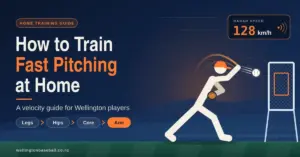
Pitching in New Zealand youth grades is governed by strict pitch counts to ensure longevity. Therefore, drills must focus on "Command" (throwing strikes) rather than "Velocity." The "Balance Point Drill" is the most effective way to build a repeatable delivery. Have the pitcher lift their lead leg and hold it for three seconds before proceeding with the throw. This builds core stability and ensures the player isn't "rushing" their motion, which is the leading cause of "wild" pitching and arm fatigue in the U13 and U16 divisions.

The 'Towel Drill' for Extension

Instead of throwing a ball, the pitcher holds a small towel between their fingers. They go through their full motion, aiming to "snap" the towel against a target out in front. This teaches "extension" and a proper "finish" without the wear and tear of actual throwing.

Pitching StepMechanical FocusCommon Youth Error
WindupConsistent starting pointMoving feet too much
LiftKnee to waist heightLeaning backward
DrivePushing off the rubber“Falling” toward the plate
ReleaseConsistent arm slotDropping the elbow (sidearm)

Base Running Intelligence and Aggression

Base running is an area where Kiwi youth can excel by leveraging the agility and "game sense" often developed in other sports. Drills should go beyond just running fast; they must include "reading the ball" and "rounding the bag." The "S-Turn" drill teaches players how to "bow out" slightly before reaching a base so they can touch the inside corner and maintain a straight line toward the next bag. In the Wellington context, understanding "dirt ball reads"—advancing when the ball hits the ground before reaching the catcher—is a high-level skill that can be introduced as early as U13.

The 'Coach's Call' Baserunning Drill

Players start at first base. The coach hits a ball into the outfield and shouts "Yes!" or "No!". The player must make an immediate decision based on the coach's visual and verbal cues, building the trust and reaction time needed for competitive play.

  • Through the Bag: Never slow down before hitting first base on a ground ball.
  • The Lead-off: Teach the "two-step and a slide" lead for older junior grades.
  • Tagging Up: Drill the patience to wait for the catch on a fly ball before sprinting.
  • Slide Technique: Practice the "figure-four" slide into a soft landing mat.

Through the Bag: Never slow down before hitting first base on a ground ball.

The Lead-off: Teach the "two-step and a slide" lead for older junior grades.

Tagging Up: Drill the patience to wait for the catch on a fly ball before sprinting.

Slide Technique: Practice the "figure-four" slide into a soft landing mat.

Catching: The General of the Field

The catcher is the only player who faces the entire field, and their drills must reflect this leadership role. Beyond "receiving" pitches, youth catchers must practice "blocking"—dropping to their knees and using their chest protector to stop balls in the dirt. The "Pop Time" drill is also essential, focusing on the footwork required to catch a pitch and quickly launch a throw to second base. In Wellington, where the weather can make the ball slick, catchers should practice these drills with "wet balls" to prepare for real-world coastal conditions.

The 'Rapid Fire' Receiving Drill

A coach stands 5 meters away and tosses balls quickly to different areas of the strike zone. The catcher must "frame" each ball toward the center of the zone without moving their body excessively. This develops the strong wrists and "quiet" hands required for elite catching.

Catching SkillTechnical FocusEquipment Needed
FramingCatching “inside” the ballCatcher’s mitt
BlockingChin down, shoulders forwardFull leg guards/chest
Throw-downsPivot and transfer speedSecond base target
TaggingSweeping tag at the plateSafe-T-Ball or similar

The Mental Game: Focus and Resilience Training

Baseball is a game of failure, and youth players must be drilled on how to handle strikeouts and errors. "Mental Resilience" drills involve scenarios where the player starts with a "bad count" (e.g., 0 balls and 2 strikes) or has to make a play after a simulated error. Teaching youth to have a "short memory" is vital. Coaches should use "Positive Visualization" at the end of every practice, having players close their eyes and imagine making a game-winning catch or hit. This builds the confidence necessary to perform when the lights are on and the pressure is high.

The 'Next Play' Scrimmage

During a practice game, the coach will occasionally "call an error" regardless of the play's outcome. The defense must immediately reset and communicate for the "next play," ensuring they don't dwell on the mistake.

  • Hustle: Make "running on and off the field" a mandatory part of practice.
  • Communication: Encourage loud, supportive chatter in the dugout.
  • Respect: Always drill the "handshake" and respect for umpires.
  • Focus: Use "breath work" drills to help pitchers stay calm between pitches.

Hustle: Make "running on and off the field" a mandatory part of practice.

Communication: Encourage loud, supportive chatter in the dugout.

Respect: Always drill the "handshake" and respect for umpires.

Focus: Use "breath work" drills to help pitchers stay calm between pitches.

High-Intensity Hitting: Soft Toss and Front Toss

Once a player has mastered the tee, they should progress to "Soft Toss" and "Front Toss." These drills introduce a moving ball but at a controlled speed that allows the coach to provide real-time feedback. Front toss is particularly effective for teaching "timing"—when to start the load and when to commit to the swing. Coaches should vary the location of the toss, forcing the hitter to adjust their hands and "drive the ball where it's pitched." This is the most effective way to prepare for the live-arm pitching found in Wellington's U16 and U19 divisions.

The 'Colored Ball' Recognition Drill

Use three different colored balls (e.g., yellow, green, white). As the coach tosses the ball, they shout a color. The player must only swing if the color matches. This develops the "eye" and discipline needed to avoid swinging at "bad" pitches.

Hitting LevelDrill TypeRecommended Frequency
BeginnerBatting Tee70% of practice
IntermediateSoft Toss (Side)40% of practice
AdvancedFront Toss (Behind screen)50% of practice
EliteMachine/Live Arm30% of practice

Winter Development: Indoor Drill Variations

Because the New Zealand season is short, winter development is where elite players are made. Indoor drills focus on "Isolated Mechanics"—working on specific parts of the swing or throwing motion in a confined space. "Weighted Ball" drills (for hitting) and "Resistance Band" workouts (for arm care) are perfect for indoor gymnasiums. Wellington's indoor batting cages provide an opportunity to work on "Bat Speed" and "Launch Angle" tracking using technology that may not be available on the windy outdoor diamonds during the summer.

The 'Mirror' Swing Drill

Players stand in front of a mirror and go through their full swing in slow motion. This allows them to see where their hands or head are "leaking" energy. It is an excellent "dry" drill for those rainy Wellington days when the fields are closed.

  • Footwork: Use ladder drills to improve "first-step" quickness for all positions.
  • Strength: Focus on core stability and rotational power (Med ball slams).
  • Video Analysis: Record swings in slow-mo to identify technical hitches.
  • Arm Care: Use "J-Bands" to maintain shoulder strength during the off-season.

Footwork: Use ladder drills to improve "first-step" quickness for all positions.

Strength: Focus on core stability and rotational power (Med ball slams).

Video Analysis: Record swings in slow-mo to identify technical hitches.

Arm Care: Use "J-Bands" to maintain shoulder strength during the off-season.

Final Thoughts

Developing youth baseball players in New Zealand requires a dedicated commitment to the fundamentals and an understanding of the unique sporting culture in the capital. By implementing a diverse range of baseball drills for youth players NZ—spanning from the batting tee to complex defensive scenarios—coaches can build a robust foundation of skill and confidence. The goal is to create a training environment that is both challenging and rewarding, fostering a generation of athletes who are technically proficient and mentally resilient. As the sport continues to grow across the Wellington region, these drills will serve as the blueprint for excellence on the diamond, ensuring that every young player has the opportunity to reach their full potential.

Frequently Asked Questions

What is the best age to start baseball drills in NZ?

Most clubs start "Kiwi Ball" or T-Ball from age 5, focusing on basic coordination before moving to technical drills at age 8 or 9.

How often should youth players practice their hitting?

Ideally, a player should get 50-100 swings on a tee at least three times a week to build consistent muscle memory.

Are wood bats better for youth drills?

Wood bats are excellent for training because they have a smaller "sweet spot," forcing the player to develop better accuracy and mechanics.

How can I help my child improve their throwing accuracy at home?

Use a "Wall Ball" drill with a tennis ball. Mark a target on a brick wall and have them aim for it while focusing on their follow-through.

What should I do if my child's arm is sore after pitching?

Immediate rest is required. Follow the Baseball New Zealand pitch-count rules and consult a coach about their throwing mechanics.

How do I teach a child to stop being afraid of the ball?

Use "Safety Balls" or tennis balls for fielding drills until they build the confidence to use a hard leather baseball.

What are 'Soft Toss' drills?

These are drills where a coach tosses the ball gently from the side into the hitter's strike zone, allowing for high-repetition swing practice.

Is base running as important as hitting?

Yes. Good base runners can turn "outs" into "runs" by taking advantage of defensive mistakes and having high "Baseball IQ."

How do I keep youth players engaged during long drills?

Keep stations short (10-15 minutes) and incorporate competitive elements or rewards for reaching specific goals.

Where can I find official NZ youth baseball rules?

You can find the standards for junior grades on the Baseball New Zealand Wikipedia page and official association sites.

External Resource: Baseball New Zealand – Wikipedia